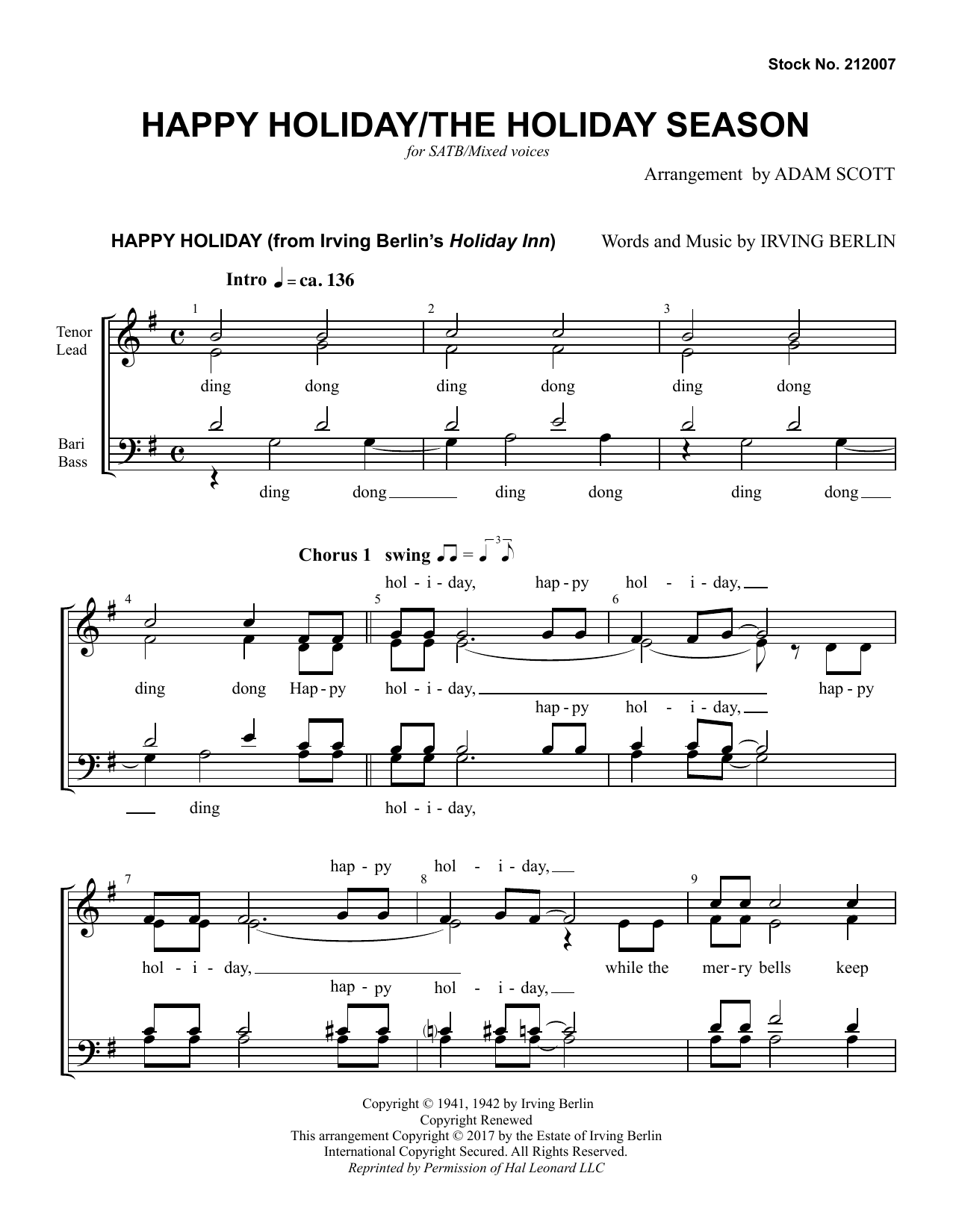
Walk into any Target or Home Depot in mid-November and you’ll hear it. That brassy, energetic blast of 1960s optimism. It starts with a classic Irving Berlin line everyone knows, but then it takes a sharp turn into something much faster, much wordier, and honestly, a little bit strange. I’m talking about Andy Williams Happy Holiday The Holiday Season, the medley that has basically become the sonic wallpaper of the American December.
It is a weird piece of music if you really stop to listen. Most people think it’s just one song. It isn't. It is a Frankenstein’s monster of a track, stitched together from a 1940s movie classic and a manic cabaret number written by a woman who taught Judy Garland how to sing.
The Secret Architect: Kay Thompson
You can't talk about this song without talking about Kay Thompson. Most people know her as the lady who wrote the Eloise books about the bratty kid living in the Plaza Hotel. Or maybe you recognize her as the fashion editor from Funny Face. But in the 1940s and 50s, she was the "Vocal Coach to the Stars" at MGM. She was brilliant, demanding, and had a rhythmic style that felt like a runaway freight train.
Andy Williams was her protégé. Some say they were more than that, but regardless of the gossip, she shaped his entire sound. When Andy was putting together The Andy Williams Christmas Album in 1963, Kay pulled out a song she’d written years earlier called "The Holiday Season."
She didn't just give him the song. She mashed it up with Irving Berlin’s "Happy Holiday," which Bing Crosby had already made famous in the 1942 flick Holiday Inn.
Why the Lyrics Are Kinda Nonsensical
Have you ever actually tried to sing along to the second half of the medley? It gets frantic. While the first half is slow and sweeping, the "Holiday Season" portion is all about internal rhymes and weird rhythmic ticks.
"So whoop-de-doo and dickory dock / And don't forget to hang up your sock."
Honestly, "sock"? No one calls it a sock. It’s a stocking. But Kay Thompson didn't care about seasonal accuracy; she cared about the swing. The song demands that Santa comes "exactly" at midnight. It insists we leave a peppermint stick for "old St. Nick." It’s breathless. It’s the musical equivalent of a three-martini Christmas party where everyone is talking at once.
It works because of Andy. Anyone else singing those lines would sound like they were having a caffeinated breakdown. Williams, however, had this "Moon River" silkiness that smoothed over the jagged edges of Thompson’s writing. He made the "whoop-de-doo" sound sophisticated.
The 1963 Powerhouse Album
We have to put this in perspective. In 1963, Columbia Records didn't even think "It's the Most Wonderful Time of the Year" was the hit. They pushed Andy’s cover of "White Christmas" instead. But Andy Williams Happy Holiday The Holiday Season became the sleeper hit that defined the "Mr. Christmas" persona.
The recording sessions happened in September 1963. Imagine Andy in a recording studio in the heat of a California late summer, trying to channel "snowy vales" while sweating through a shirt. He recorded the whole album in about five days.
The medley wasn't just a radio hit; it was a TV staple. If you grew up watching The Andy Williams Show, you saw this performed with the Williams Brothers or the Osmonds. It was part of that "Plastic Christmas" aesthetic—perfect sweaters, perfect teeth, and high-production values. It felt safe.
Why It Still Ranks Every Single Year
There is a specific reason this song stays on the Billboard charts while other 60s carols fade. It’s the tempo. Most Christmas music is either a slow ballad or a mid-tempo trot. This medley is a sprint.
Retailers love it because it keeps shoppers moving. It’s scientifically designed to make you feel like you’re behind on your shopping. When that brass section kicks in after the first "Happy Holiday" chorus, your heart rate actually ticks up a bit. It’s the sound of productivity.
But there’s also the nostalgia factor. For a lot of people, this song represents a version of the holidays that probably never existed—a time when families sat around the piano and everyone knew their harmonies. It’s a polished, shimmering version of reality.
Common Misconceptions
- "It's an Irving Berlin song." Only half of it is. Berlin wrote "Happy Holiday." Kay Thompson wrote "The Holiday Season."
- "It was written for the TV special." Nope. It was a standalone arrangement for the 1963 album, though the TV specials definitely made it legendary.
- "Andy Williams wrote it." Andy was many things, but a songwriter wasn't really one of them. He was an interpreter. He took Kay’s frenetic energy and made it palatable for the suburbs.
How to Listen Like a Pro
Next time this comes on the radio, listen for the transition. It happens at about the 45-second mark. The transition from the Berlin section to the Thompson section is a masterclass in 60s arranging. The key shift and the sudden entry of the "Holiday Season" refrain is what gives the song its "lift."
Also, pay attention to the backup singers. They are doing some incredibly complex vocal work that most people tune out. They’re the ones hitting those "ding-dong" bells and rhythmic "hums" that keep the engine turning.
If you want to dive deeper into the "Mr. Christmas" lore, track down a vinyl copy of the 1963 album. Digital remasters are fine, but there is something about the analog warmth of the brass on that record that makes the "whoop-de-doo" feel a little more real.
Actionable Insights for Your Holiday Playlist:
- Pairing: If you’re making a playlist, don't put this next to a slow song like "The Christmas Song." It kills the vibe. Pair it with Brenda Lee’s "Rockin' Around the Christmas Tree" or Darlene Love’s "Christmas (Baby Please Come Home)."
- The "Kay Thompson" Connection: If you like the frantic energy of this medley, go find Kay Thompson’s version of "Jingle Bells." It’s even crazier and shows where Andy got his "swing" from.
- Visuals: Watch the 1966 TV special version on YouTube. Seeing the choreography helps explain why the song is structured the way it is—it was meant to be a dance number as much as a vocal one.