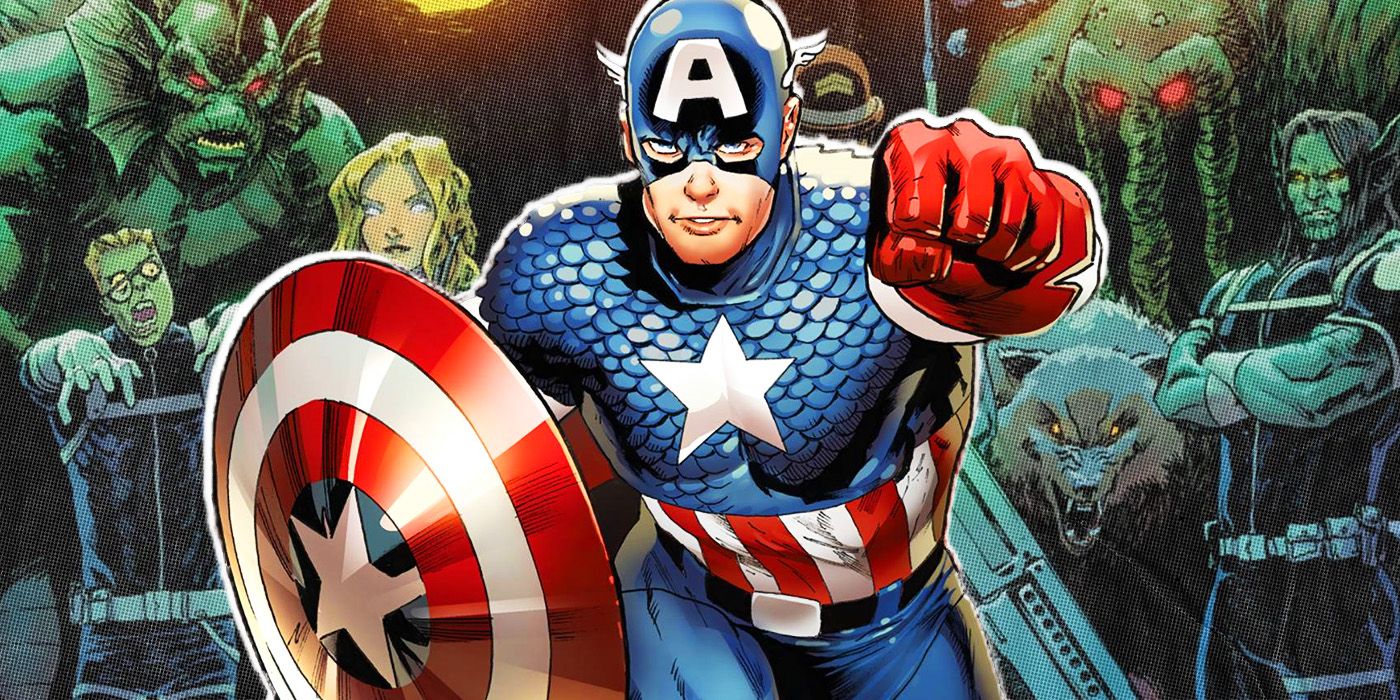
Steve Rogers didn't win World War II alone. While the movies make it look like a one-man wrecking crew in red, white, and blue, the comic book reality is much messier. And more interesting. If you actually look at the history of Captain America and the Howling Commandos, you find a weird, grit-covered bridge between the Golden Age of comics and the modern MCU.
It's a weird partnership. Rogers is the Super Soldier, the peak of human potential. The Commandos? They’re just guys. They’re loud, they’re messy, and they’re definitely not "super." But they represent the actual soul of the Marvel Universe’s wartime era.
Why We Keep Coming Back to Captain America and the Howling Commandos
Most people assume the Commandos were always Steve's backup. Not true. In reality, Stan Lee and Jack Kirby created Sgt. Fury and his Howling Commandos in 1963 as its own thing. It was a gritty, cigar-chomping war book. Steve Rogers was still technically "frozen" in the continuity of the early 60s when the Commandos first started screaming "Wah-Hoo!" across the page.
The crossover didn't happen immediately. Marvel had to retroactively fit Captain America into the unit's history. This created a bit of a continuity headache that writers have been smoothing over for decades. Honestly, it’s one of the best "retcons" in history because it gave Steve Rogers a family. Without them, he’s just a government experiment. With them, he’s a leader.
You’ve got to understand the roster. It wasn't just a bunch of random soldiers. Nick Fury—long before the eye patch and the LMDs—was the heart. Then you had Dum Dum Dugan with the bowler hat, Gabe Jones, Dino Manelli, Izzy Cohen, Rebel Ralston, and Junior Juniper. Juniper is actually a crazy piece of trivia. He was one of the first major characters Marvel ever killed off. It shocked readers in 1963. Nobody was safe. That sense of real stakes is why the bond between Captain America and the Howling Commandos feels so earned.
The Diversity Pioneer Nobody Talks About
We talk a lot about representation in movies today. But look at Gabe Jones. He was a Black man serving in an integrated unit in a comic book published in 1963, set in the 1940s. The US military didn't actually integrate until 1948. Stan Lee and Jack Kirby just did it anyway. They didn't ask for permission. They just showed a Black man, a Jewish man, and an Italian-American fighting Nazis side-by-side.
It was radical.
The Cinematic Shift: From 1940s Comics to the MCU
The 2011 film Captain America: The First Avenger changed the dynamic forever. In the comics, Fury was the boss. In the movie, Steve is the one who rescues them from a HYDRA camp and forms the team. It’s a subtle shift but it changes the power dynamic.
In the MCU, the lineup looks a bit different. You still have Dum Dum Dugan (Neal McDonough) and Gabe Jones (Derek Luke). But they added characters like Jim Morita and James Montgomery Falsworth. They basically blended different eras of Marvel war comics into one elite squad.
It worked.
The chemistry on screen reflected the "found family" vibe that Kirby originally drew. When Steve Rogers loses Bucky on that train, it’s the Commandos who are there in the pub, mourning with him. They are his tether to humanity.
The Gear and the Grunt Work
Let’s get technical for a second. The Commandos didn't use Stark Tech. They used standard-issue M1 Garands, Thompson submachine guns, and sheer grit. This creates a fascinating visual contrast whenever they share a panel with Cap.
- Steve Rogers: Vibranium shield, experimental uniform, peak agility.
- The Commandos: Wool jackets, heavy boots, tobacco stains, and 30-pound rucksacks.
This contrast is essential for the "Man Out of Time" trope. If Steve was just leading other superheroes, he wouldn't feel so isolated when he eventually wakes up in the 21st century. He misses the guys who smelled like gunpowder and cheap coffee. He misses the Howlers.
Common Misconceptions About the Unit
A lot of fans think Nick Fury was always an officer. Nope. In the original Sgt. Fury run, he was a non-commissioned officer. A sergeant. He was the guy in the mud with the men. The transition of the Howling Commandos into a SHIELD-adjacent unit happened much later in the timeline.
Another big mistake? Thinking they only fought Nazis. They went up against HYDRA, the Red Skull's personal guard, and even supernatural threats in later "weird war" iterations. Marvel loves to lean into the occult side of WWII, and the Commandos are usually the ones stuck in the middle of it.
The Legacy of the "Wah-Hoo!"
The battle cry "Wah-Hoo!" sounds silly now. In 1963, it was a brand. It was the sound of the underdog winning.
When you look at the modern landscape of the Marvel Universe, the DNA of the Howling Commandos is everywhere. You see it in the way the Avengers interact—that bickering, casual, "we're all gonna die anyway" humor. That didn't start with Iron Man. It started in the foxholes of the 616 version of WWII.
The Commandos also paved the way for groups like the Thunderbolts or the Guardians of the Galaxy. They proved that readers liked a group of "misfits" more than a group of perfect paragons. They were the original "ragtag bunch of heroes."
How to Dive Deeper into the Lore
If you're looking to actually understand the weight of this team, don't just watch the movies.
Start with Sgt. Fury and his Howling Commandos #1. It’s dated, sure. The dialogue is "Lee-speak" at its peak. But the energy is undeniable. Then, jump to the Captain America: White miniseries by Jeph Loeb and Tim Sale. It captures the emotional core of the relationship between Steve, Bucky, and the unit. It’s hauntingly beautiful and explains exactly why Steve feels so much guilt over that era.
Check out the Secret Avengers run from the 2010s too. It deals with the legacy of the Commandos in a modern context, showing how the "Howling Commando" name has been used for everything from monster squads to black-ops teams.
What This Means for the Future
With the MCU moving into new phases, the legacy of the Commandos usually pops up in unexpected ways. We saw it in Agents of S.H.I.E.L.D. and Agent Carter. We see it in the legacy of characters like Eli Bradley. The "Howling Commando" isn't just a title; it's a specific type of soldier who does the dirty work so the guy with the shield can be a symbol.
Actionable Steps for Fans and Collectors
If you want to track the history of Captain America and the Howling Commandos effectively, follow these steps:
- Track the First Appearance: Look for Sgt. Fury and his Howling Commandos #1 (1963). If a physical copy is too expensive, it's widely available on digital platforms.
- Identify the "Key Three" Issues: Read Avengers #4 (Cap joins the Avengers), Sgt. Fury #13 (The first major crossover), and Captain America #100.
- Explore the "Creature" Era: For a fun twist, look into the Howling Commandos of S.H.I.E.L.D. (2015) series, which reimagines the team as classic monsters (Warwolf, Vampire by Night). It shows how versatile the brand is.
- Visit the Paley Center or Comic Archives: Research the influence of Jack Kirby’s real-world military service on the Commandos. Kirby was a scout in the 11th Infantry Regiment and saw actual combat, which is why the Commandos feel more "real" than other silver age characters.
- Differentiate the Units: Make sure you can distinguish between the "First Line," the "Invaders," and the "Howling Commandos." They often get lumped together, but the Commandos were specifically the elite infantry unit, whereas the Invaders were the "heavy hitters" like Namor and the Human Torch.
The story of Steve Rogers and his unit is a reminder that even a Super Soldier needs a squad. It's about the collective effort of human beings standing against overwhelming darkness. That’s a theme that never actually gets old, no matter how many times we reboot the universe.