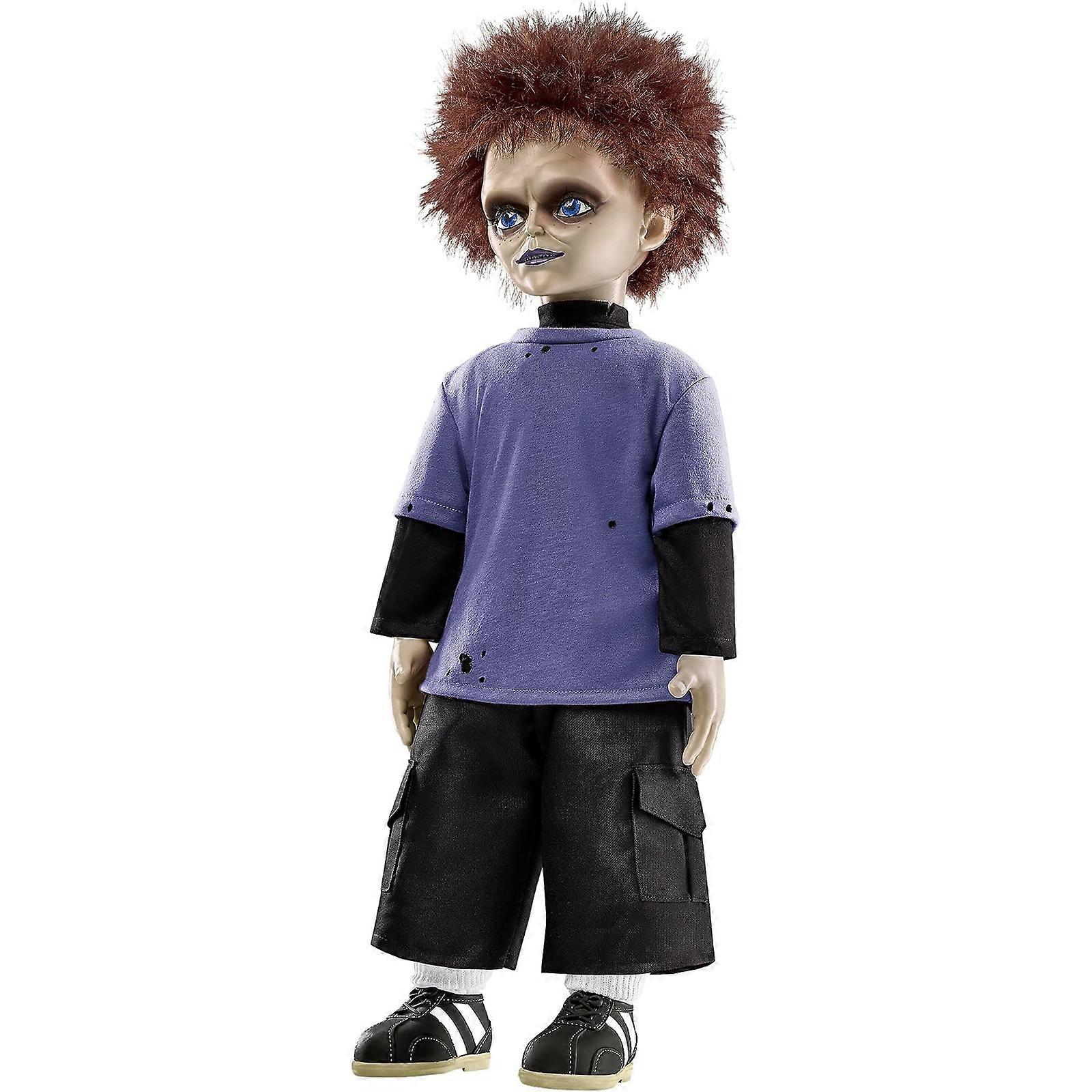
He’s the two-foot-tall plastic nightmare that ruined sleep for an entire generation of kids in the late eighties. Most people just call him Chucky. But if you’re a die-hard horror fan or just someone who caught a late-night marathon on Syfy, you know that the "Good Guy" doll wasn't always just a doll. He started as a man. A very bad man. So, what was Chucky's real name before he transferred his soul into a toy using a Damballa chant?
His name was Charles Lee Ray.
It’s a name that carries a lot of weight in the slasher genre, mostly because it wasn't just pulled out of a hat by writer Don Mancini. There is a dark, calculated logic behind those three words. If you look closely at the history of American crime, the name Charles Lee Ray is actually a Frankenstein’s monster of three of the most notorious real-life killers to ever walk the earth.
The Triple Threat: Breaking Down the Name
When Mancini was crafting the script for Child’s Play (1988), he wanted the human version of the killer to feel grounded in a very specific kind of American dread. He didn't want a supernatural boogeyman like Freddy or Jason—at least not at first. He wanted a "Lakeshore Strangler."
To get that authentic, true-crime grit, he mashed together the names of three men who defined the word "infamous."
Charles Manson
The first part of the name comes from the cult leader of the Manson Family. Charles Manson didn't even have to pull the trigger himself to become a household name for evil. By using "Charles," the filmmakers immediately tapped into the cultural anxiety of the late 60s and 70s. It’s a classic, unassuming name that hides a total lack of empathy.
Lee Harvey Oswald
The middle name "Lee" comes from the man accused of assassinating President John F. Kennedy. Oswald represents a different kind of horror: the lone gunman, the political instability, and the cold, calculated sniper. It adds a layer of precision and "manhunt" energy to the character of Charles Lee Ray.
James Earl Ray
The surname "Ray" is a nod to the man who assassinated Martin Luther King Jr. By the time you get to the end of the name, you've covered a cult leader and two of the most high-profile assassins in history. It’s a heavy name. It feels "serial killer-ish" because, phonetically, it’s built from the DNA of real-world monsters.
Who Was the Man Before the Doll?
Before he became a ginger-haired toy, Charles Lee Ray was a prolific serial killer in Chicago. In the original 1988 film, we only see him as a human for a few minutes. He’s played by Brad Dourif—who would go on to voice the doll for decades—and he’s cornered in a toy store by Detective Mike Norris (played by Chris Sarandon).
Ray is bleeding out. He’s desperate. He’s been betrayed by his partner, Eddie Caputo.
This is where the lore gets interesting. Charles Lee Ray wasn't just a stabby guy in a trench coat. He was a practitioner of Voodoo—specifically a fictionalized, Hollywood version of it. As he lay dying among the stacks of "Good Guy" dolls, he performed the "Soul of the Devil" chant to transfer his consciousness.
"Ade due damballa. Give me the power, I beg of you!"
The lightning strikes, the store explodes, and Charles Lee Ray officially dies. But Chucky is born.
Why Chucky’s Real Name Keeps Popping Up
You might wonder why we even care about the human name after seven movies and a TV series. It’s because the franchise, unlike Halloween or Friday the 13th, has an incredibly tight continuity. Don Mancini has steered the ship since the beginning, and he loves to dig back into Ray’s past.
In the Chucky TV series, we actually get flashbacks to Charles Lee Ray’s childhood in the 1960s. We see him as a young boy (played by David Kohlsmith) and as a young man (played by Fiona Dourif, Brad’s daughter, in an incredible bit of prosthetic casting). We learn that he wasn't "made" a monster by some tragic accident. He was born this way.
He killed his own mother. He started "collecting" victims early. He even had a brief stint as a "mentor" to other budding killers. Knowing that his name is Charles Lee Ray reminds the audience that there is a human ego inside that plastic shell. He’s not a ghost; he’s a criminal who found a loophole in death.
The Evolution of the Lakeshore Strangler
In the early films, the focus was mostly on Chucky trying to get out of the doll. He needed to transfer his soul into the first person he told his secret to—which happened to be six-year-old Andy Barclay.
But as the series evolved into Bride of Chucky and Seed of Chucky, the Charles Lee Ray persona became more of a brand. He stopped caring so much about being human again. Why be a fragile human who can be shot or jailed when you can be an immortal doll that people underestimate?
By the time we get to Cult of Chucky, he’s even figured out how to split his soul. There are multiple Chuckies running around, but they all answer to the same ego: Charles Lee Ray. He’s the CEO of his own tiny, murderous corporation.
Misconceptions About the Name
Sometimes you'll hear people call him "Chucky Ray" or just "Charles Ray." That’s technically wrong. In the world of the films, the police files and news reports always refer to him by the full triple-barreled Charles Lee Ray.
There's also a weird Mandela Effect where people think his name was "Chucky" before he died. Nope. "Chucky" is the nickname he adopted after inhabiting the Good Guy doll. It’s a sick joke. He took a name meant for a child’s best friend and made it synonymous with a kitchen knife.
Honestly, the name Charles is almost never used by his peers. Tiffany Valentine, his long-time partner in crime, usually calls him "Chucky" or "Lee" in very specific, intimate moments of frustration. To the world of Chicago crime, he was the Lakeshore Strangler. To horror history, he’s the guy who made us all check under our beds for toys.
Actionable Insights for Horror Fans
If you're looking to dive deeper into the lore of Charles Lee Ray, here is how you should approach the franchise to see his "human" side:
- Watch the Flashbacks in the 'Chucky' TV Series: Specifically Season 1, Episodes 3 and 4. They provide the most detailed look at his life in Hackensack before he fled to Chicago.
- Pay Attention to the 'Voodoo' Lore: The name of his mentor, John "Dr. Death" Bishop, is crucial. He’s the one who taught Ray the Damballa chant in the first place, thinking Ray would use it for "protection," not world-class serial killing.
- Look at the Casting: Fiona Dourif playing the younger version of her father’s character in Chucky is a masterclass in physical acting. She mimics his tics and vocal patterns perfectly, bridging the gap between the man and the doll.
- The 'Good Guys' Branding: Notice that the dolls were originally designed to be "your best friend." The irony of a man named after three famous assassins inhabiting a "Best Friend" toy is the core dark comedy of the entire series.
The legacy of Charles Lee Ray isn't just about jump scares. It’s a weirdly consistent character study of a narcissist who refused to stay dead. Whether he’s a 1980s slasher or a 2020s TikTok-savvy doll, the man behind the plastic remains the same. He's Charles Lee Ray, and he’s your friend 'til the end.