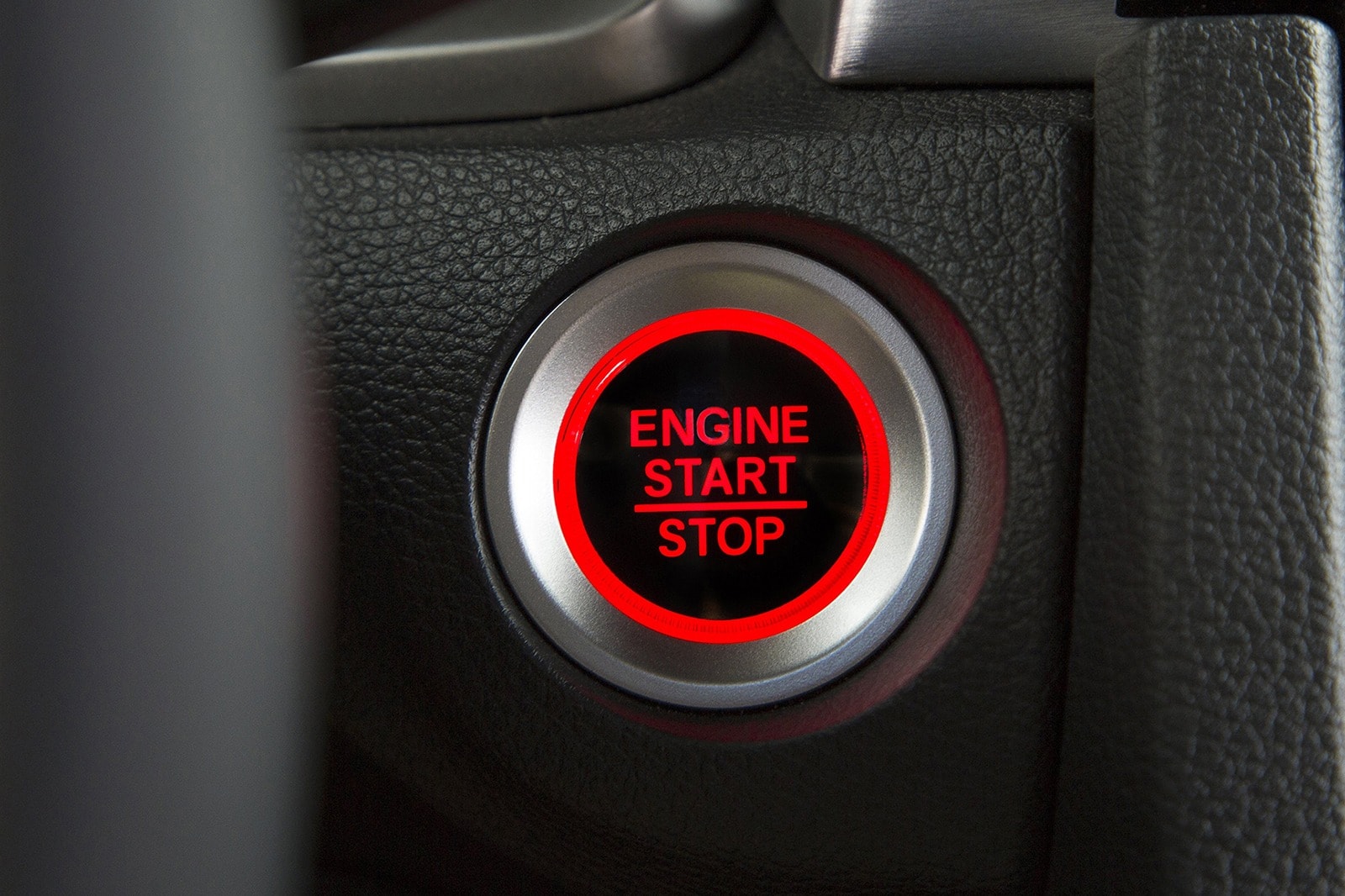
You’re standing in the driveway, fumbling with a ring of jagged metal keys while balancing a coffee and a laptop bag. It feels prehistoric. In a world where your watch unlocks your front door and your phone pays for your groceries, why are you still stabbing a piece of brass into a steering column? This frustration is exactly why the push button start kit has moved from a niche luxury car feature to a weekend project for thousands of DIY mechanics and tech enthusiasts.
But here’s the thing.
It isn't always as simple as "plug and play." If you’ve spent any time on forums like r/ProjectCar or specialized enthusiast sites like LS1Tech, you know that for every successful install, there’s someone who accidentally fried their Body Control Module (BCM) or ended up with a steering wheel that permanently locks while they're driving. Replacing a traditional ignition cylinder with a digitized button involves a complex dance between high-amperage wiring, RFID security protocols, and mechanical bypasses.
The Reality of Aftermarket Ignition Tech
We aren't in the 1990s anymore where you could just hotwire a car by twisting two wires together. Modern vehicles—basically anything built after 1996—utilize transponder chips. When you buy a push button start kit, you aren't just buying a pretty plastic button that glows blue; you're buying a computer that has to trick your car into thinking a physical key is present.
Most high-end kits, like those from Advanced Keys or Digital Guard Dawg, use Passive Keyless Entry (PKE). This is the "magic" part. You walk up, the doors click open because the RFID tag in your pocket communicated with the antennas you tucked behind the door pillars, and the ignition prepares to fire. It feels seamless. Honestly, it’s addictive. Once you stop reaching for your keys, going back to a "normal" car feels like using a rotary phone.
However, the hardware varies wildly. You can find "universal" kits on marketplaces for $40 that look decent in photos but use thin, 18-gauge wire for circuits that need to handle 30 amps of cranking current. That’s a fire hazard, plain and simple. Experts generally recommend looking for kits that use heavy-duty relays and thick-gauge copper wiring. If the brain box of the kit feels as light as a deck of cards, it probably isn't built to survive the heat cycles of a car interior over five years.
🔗 Read more: Why It’s So Hard to Ban Female Hate Subs Once and for All
Why People Actually Do This (and the Risks Involved)
Convenience is the obvious answer. You’ve probably seen the videos of people walking toward their 1969 Mustang and having it roar to life without them touching a thing. That "wow" factor is huge. There is also a genuine security benefit if you choose a kit with a rolling code encrypted RFID. It makes traditional hotwiring almost impossible because there is no physical key tumbler to pick or force.
But let’s talk about the steering lock. This is the part that keeps most mechanics up at night.
In almost every car, the physical ignition cylinder has a mechanical pin that locks the steering wheel when the key is removed. If you install a push button start kit, you have to deal with this. Some people just cut a spare key, stick it in the "ACC" position, and snap it off so it’s hidden under the button. It works. It's also kinda janky. The professional way involves removing the locking pin entirely from the steering column, which is a labor-intensive process that requires pulling the steering wheel and using specialized pullers. If you don't do this, and your "bypass" key wiggles loose, your steering could lock while you’re doing 60 mph on the freeway.
Don't skip the mechanical safety steps.
The RFID vs. Bluetooth Debate
Lately, there’s been a surge in kits that use your smartphone as the key via Bluetooth Low Energy (BLE). On paper, it's brilliant. You never forget your phone. In practice? Bluetooth can be finicky. If your phone battery dies or the app glitches after an OS update, you're stranded. Dedicated RFID fobs are generally considered "Gold Standard" for reliability because they don't rely on software handshakes between different tech ecosystems.
💡 You might also like: Finding the 24/7 apple support number: What You Need to Know Before Calling
Installation Nuances Nobody Mentions
If you're looking at a push button start kit, you need to identify your car’s ignition switch type. Most vehicles use a high-current switch where the key physically closes a heavy circuit. Some newer cars, however, use a "data-style" ignition where the key just sends a low-voltage signal to a computer. You cannot use a high-current kit on a data system without a specific bypass module like those made by iDatalink or Fortin.
- Brake Switch Integration: The button won't (and shouldn't) start the engine unless your foot is on the brake. You’ll have to tap into the cold side of your brake switch wire.
- Tachometer Sensing: High-quality kits "listen" to the engine’s RPM or voltage to know exactly when the car has started so they can stop the starter motor. Cheap kits just "guess" and crank for a set 2 seconds, which can grind your starter gears.
- Neutral Safety: If you have a manual transmission, you absolutely must wire the kit into the clutch pedal or neutral safety switch. If you don't, and you remote start the car while it's in gear, it will literally drive itself into your garage wall.
It is a lot of wire-stripping. You’ll likely be upside down in your driver-side footwell for four hours, squinting at a wiring diagram with a multimeter in one hand. It is not a "quick Saturday morning" job for a beginner. It's a deep dive into your car's central nervous system.
Making the Final Decision
Is a push button start kit worth it? If you have an older vehicle that you plan on keeping for years, or if your ignition cylinder is already failing (a common issue on older Hondas and GMs), it makes a lot of sense. You’re essentially upgrading the car’s brain to 2026 standards.
Just avoid the bottom-barrel kits. Brands like EasyGuard have built a decent reputation in the mid-range market, while Jordan Distributors Inc offers "Ghost" keys that are highly regarded for specific makes like Honda and Toyota. They focus on plug-and-play harnesses which save you from the nightmare of cutting your factory wires. Always check for a "valet mode" in the kit specs. You don't want to have to give your secret RFID tag to a mechanic or a car wash attendant every time they need to move the vehicle.
Actionable Next Steps for a Successful Install
If you’re ready to ditch the keys, do not just start cutting wires. Follow this sequence to avoid turning your car into a very expensive paperweight.
📖 Related: The MOAB Explained: What Most People Get Wrong About the Mother of All Bombs
First, download the specific wiring diagram for your vehicle's year, make, and model from a reputable source like the12volt.com. You need to know exactly which wire is "12V Constant," "Ignition 1," "Ignition 2," and "Starter." Colors change between years, even in the same car model.
Second, test your wires with a digital multimeter, not a test light. Modern ECUs are sensitive; a traditional test light can pull too much current and pop a circuit. Verify that your "Starter" wire only shows 12V when the key is actually in the crank position.
Third, decide on your steering lock strategy. If you aren't comfortable disassembling the column to remove the locking pin, reconsider the project. Using a "dummy key" in the cylinder is a common workaround, but ensure it is secured with high-temp adhesive so it cannot vibrate into the "Off" position.
Fourth, mount your antennas strategically. RFID signals hate metal. If you hide the PKE antenna behind a metal pillar, the range will be terrible. Plastic dash trim or the "A" pillar covers are usually the best spots for maximum signal "spread."
Finally, solder every connection. T-taps and "vampire" clips are the leading cause of kit failure. The vibrations in a car will eventually loosen a crimp connection, leading to a car that won't start—usually at the worst possible time. Use heat shrink tubing to seal everything up. Once it's installed, hide the main control module deep enough that a thief can't just reach under the dash and unplug it.