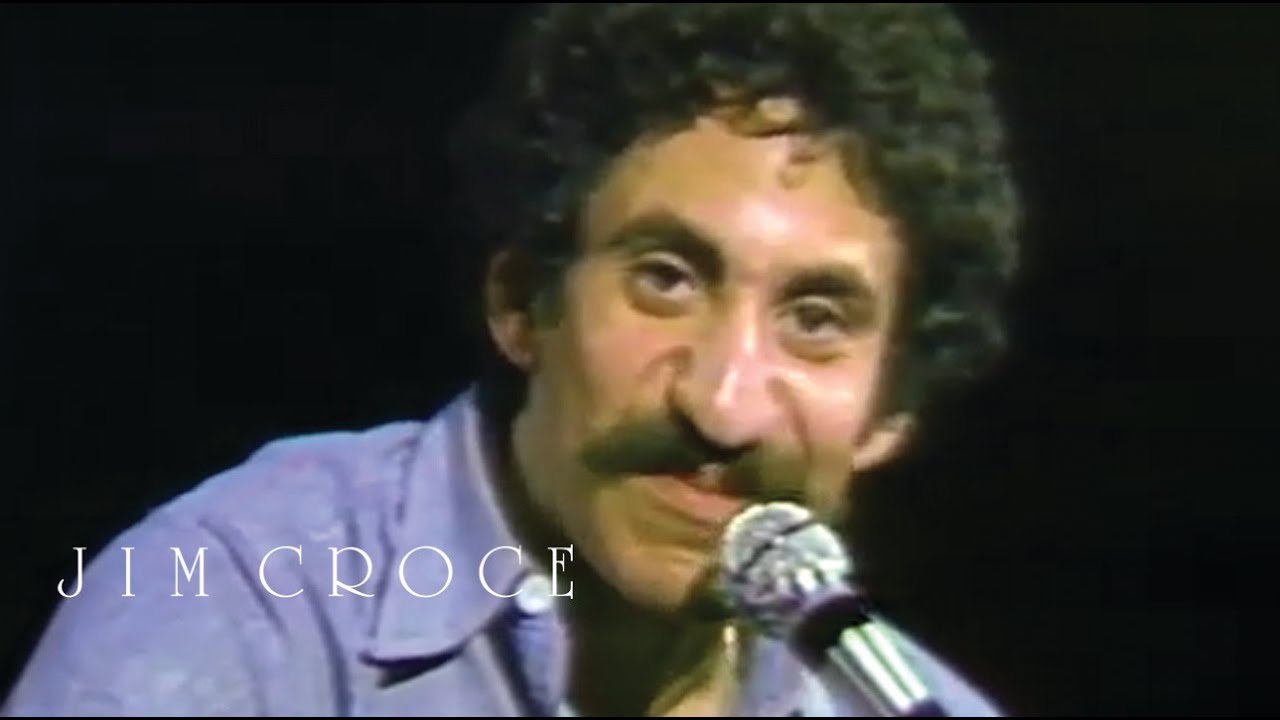
If you walked into a smoky Pennsylvania steakhouse in 1968, you might have seen a guy with a thick mustache and an acoustic guitar singing about a car wash or a guy named Leroy Brown. You probably would’ve pegged him as a folk singer. And you’d be right, mostly. But labels have a funny way of failing someone like Jim Croce.
What genre is Jim Croce? Well, the short answer is folk rock. But that’s like saying a five-course meal is "food." It doesn't really capture the flavor of the blues, the country twang, or the soft rock polish that made his music a staple of 1970s radio.
Croce was a blue-collar storyteller who happened to have a gift for melody. He wasn't some untouchable rock star living in a mansion; he was a guy who spent years driving trucks and working construction. That grit bled into his music, creating a sound that was as honest as a day's work and as smooth as a shot of whiskey.
The Foundation: Folk and the Art of Storytelling
At his core, Croce was a folksinger. He grew up during the massive folk revival of the early 60s, cutting his teeth on artists like Woody Guthrie, Ian & Sylvia, and Gordon Lightfoot. If you listen to his early work with his wife, Ingrid, the influence is obvious. It’s stripped-back, earnest, and deeply rooted in the oral tradition of sharing stories.
But Jim had a secret weapon: he was hilarious.
While many folkies of the era were busy being "serious" or political, Croce was writing about "Roller Derby Queen" and "Speedball Tucker." He took the traditional folk structure—simple chords and a focus on the lyrics—and populated it with the colorful, gritty characters he met at truck stops and bars.
The Characters of Jim Croce's World
- Leroy Brown: The "baddest man in the whole damn town."
- Jim: The pool-hall king you don't mess around with.
- Rapid Roy: The stock car boy who’s always in a hurry.
These aren't just songs; they’re three-minute movies. This storytelling ability is the hallmark of the folk genre, but Croce’s delivery had a rhythmic bounce that leaned toward something else entirely.
Soft Rock and the 70s Radio Revolution
By the time 1972 rolled around, the musical landscape was shifting. The raw, protest-heavy folk of the 60s was evolving into a more polished, melodic sound that we now call soft rock or singer-songwriter pop.
Songs like "Time in a Bottle" and "I'll Have to Say I Love You in a Song" are perfect examples of this. They feature lush arrangements, gentle vocals, and a level of emotional vulnerability that felt brand new. Honestly, "Time in a Bottle" is basically the blueprint for the 70s sensitive-guy ballad.
It’s worth noting that Croce didn’t achieve this sound alone. We have to talk about Maury Muehleisen.
Maury was a classically trained pianist and a wizard on the lead acoustic guitar. His intricate, shimmering guitar lines provided the perfect counterpoint to Jim's steady rhythm playing. Together, they created a sonic texture that was too sophisticated to be "just folk" but too acoustic to be "hard rock." It was the sweet spot that allowed Croce to dominate the Billboard charts.
The Bluesy Undercurrent
If you listen closely to the shuffle in "Workin' at the Car Wash Blues" or the piano in "Life and Times," you’ll hear a heavy dose of the blues.
Jim spent a lot of time in South Philadelphia, and he was deeply influenced by the R&B and soul he heard on the radio there. He even worked as a DJ for a while, translating commercials into "soul" for an R&B station. That rhythmic "swing" is what makes his songs so catchy. You can tap your foot to a Jim Croce song in a way that you can't always do with a standard folk ballad.
He had this "stride blues" influence that came through in his fingerpicking. It gave his music a sense of momentum. It felt like a car rolling down the highway.
Why the Genre Label is So Tricky
Most people struggle to pin Jim Croce down because he occupied a transition period in music history. He was:
- A Folk singer because of his storytelling and acoustic roots.
- A Soft Rock artist because of his melodic hits and radio appeal.
- A Country artist in spirit, given his focus on working-class life.
- A Blues artist in his rhythm and "good-time" musicality.
He was a "hybrid" before that was a buzzword. He was the bridge between the coffeehouses of the 60s and the arenas of the 70s.
Was he Folk-Punk?
Interestingly, some modern listeners, especially in the folk-punk community, claim him as a spiritual ancestor. They see his songs about losers, brawlers, and the daily grind as a precursor to the raw, anti-establishment energy of folk-punk. It’s a bit of a stretch, but it shows just how much his "character studies" still resonate with people today.
The Legacy of a Blue-Collar Poet
Jim Croce died in a plane crash in September 1973 at the age of 30. He was at the absolute peak of his powers. His final album, I Got a Name, was released posthumously and featured some of his most diverse work yet.
The title track, "I Got a Name," wasn't even written by him (it was by Charles Fox and Norman Gimbel), but he sang it with such conviction that it became his anthem. It was a bit more "country-pop" than his earlier stuff, suggesting that if he had lived, he might have leaned even further into a crossover sound.
Kinda makes you wonder what else he had in him.
Today, you’ll hear his music in movies, commercials, and on "Classic Hits" stations. He’s one of the few artists who can be played on a folk station, a classic rock station, and a country station without anyone blinking an eye.
How to Explore Jim Croce's Music Today
If you’re trying to get a handle on the "Jim Croce sound," don't just stick to the greatest hits. You’ve gotta dig into the album tracks to see how he blended these genres.
The "Must-Hear" Roadmap:
- For the Folk Purest: Listen to "Age" or "Tomorrow's Gonna Be a Brighter Day." These show his vulnerability and simple, effective songwriting.
- For the Blues Fan: Check out "Hard Time Losin' Man" or "Workin' at the Car Wash Blues." You’ll hear that Philly soul influence.
- For the Storyteller: "Box #10" is a masterclass in narrative songwriting. It’s the story of a young kid arriving in the city with nothing but a guitar and getting chewed up by the world.
- For the Guitar Geek: Listen to "Operator" or "Time in a Bottle" and focus purely on Maury Muehleisen’s lead guitar work. It’s incredibly difficult to play but sounds effortless.
Actionable Insights for the Music Lover:
If you want to truly appreciate the Jim Croce genre-bending style, try learning one of his songs on guitar. You’ll quickly realize that while the chords are often simple (G, C, D), the timing and the interplay between the two guitars are incredibly complex.
Also, take a moment to read his lyrics as poetry. Strip away the music, and you’ll find that his use of specific details—like mentioning a "custom Continental" and an "Eldorado"—is what makes the stories feel real. He didn't use generic terms; he used the language of the people he worked with.
Jim Croce wasn't just a singer. He was a chronicler of a specific American experience. Whether you call it folk, rock, or something in between, the music remains as relevant now as it was when it was first recorded in a basement in Pennsylvania. Empty your pockets, keep the dime, and just listen.