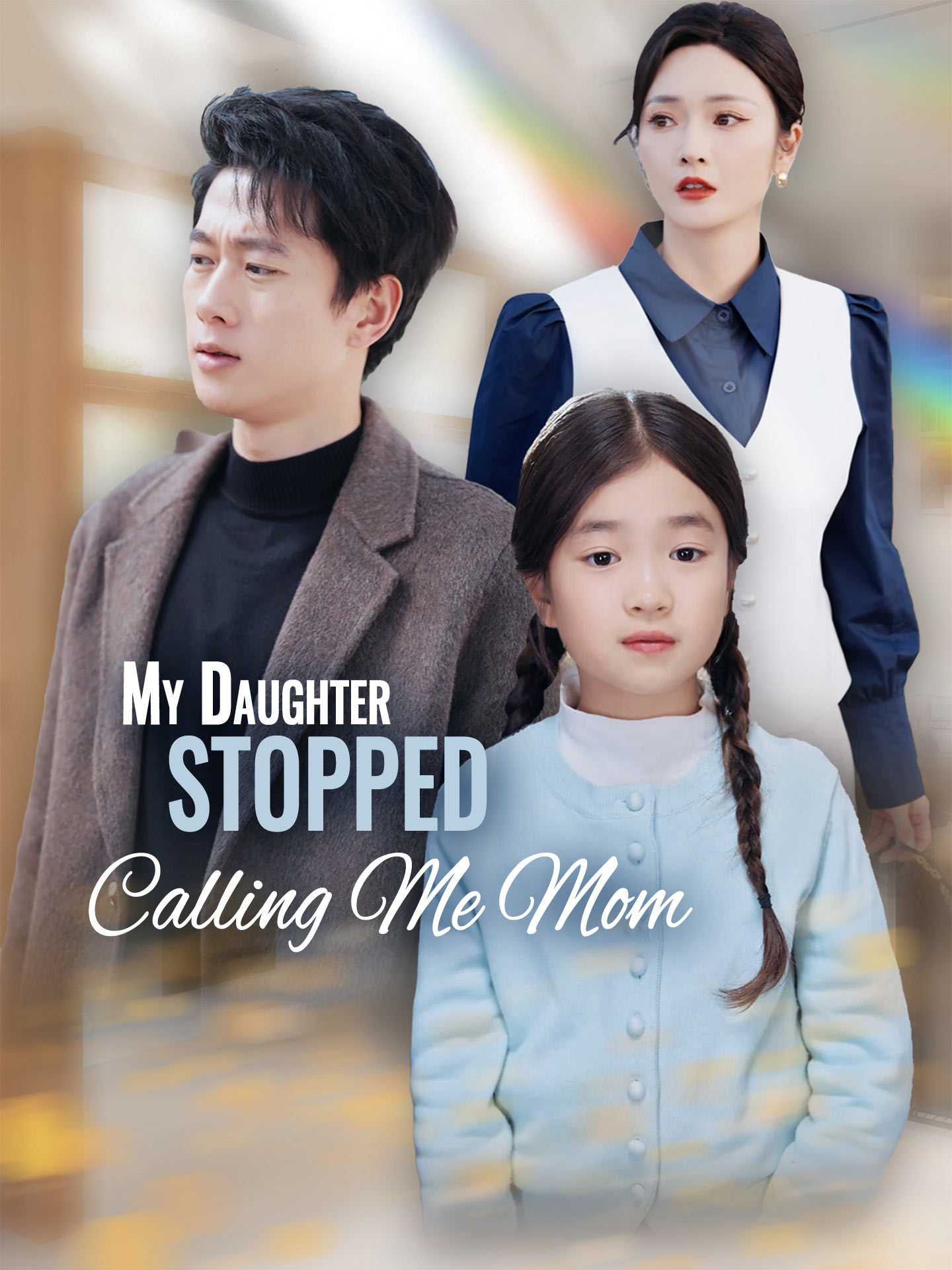
It hits like a physical blow. You’re in the kitchen, maybe folding laundry or staring at the fridge, and she says it. Or rather, she doesn’t say it. The word "Mom" just... vanishes. One day you’re the center of her universe, the primary caregiver, the person she yells for when she scrapes a knee. The next, you’re "she," "her," or maybe just a nameless entity she directs requests toward. Sometimes, it’s even worse. She starts calling you by your first name.
It feels like a demotion. It feels like a rejection of the very DNA you shared.
Honestly, when my daughter stopped calling me mom, I felt like I was grieving a person who was still standing right in front of me. I looked for reasons everywhere. Was she angry? Was I failing? Was this some weird TikTok trend I didn't know about? It turns out, this shift in language is a documented psychological phenomenon, and while it feels personal—deeply, painfully personal—it’s often about her own internal development rather than your "performance" as a parent.
The Psychological Mechanics of the Name Shift
Psychologists often point to a process called individuation. This isn't just a fancy word for "being a teenager." It’s a messy, necessary stage of human development where a child tries to figure out where you end and they begin. To a toddler, "Mom" is an extension of themselves. To a pre-teen or teenager, "Mom" can feel like a title that carries too much weight, too much history, or too much "little kid" energy.
Dr. Lisa Damour, a clinical psychologist and author of Untangled, often discusses how teenagers need to create distance to feel like independent agents. If she stops calling you Mom, she might be trying to level the playing field. By stripping away the title, she's subconsciously saying, "I am an adult-in-training, and you are just another person." It’s cold. It’s clinical. And for the child, it’s a way to feel powerful in a world where they still have to ask for a ride to the mall.
Sometimes, this happens much earlier than the teen years. You’ll see it in seven or eight-year-olds who are suddenly "too cool" for the domestic intimacy that the word "Mom" implies. They’ve seen a movie or a YouTube creator who calls their parents by their first names, and they want to try on that persona. It’s like a costume.
Is it a Sign of Attachment Issues?
We have to talk about the harder stuff, too. In some cases, the loss of the title "Mom" is a symptom of Parental Alienation or a significant rupture in the relationship. If you are going through a high-conflict divorce, and the other parent is "bad-mouthing" you, a child might drop the title to align themselves with the "preferred" parent. It becomes a loyalty test.
However, don't jump to the darkest conclusion first. Look at the context. Is she still talking to you about her day? Is she still eating the dinner you make? Is she generally respectful otherwise? If the answer is yes, the "Mom" strike is likely a developmental phase. If she has shut down entirely, stopped making eye contact, and is treating you with active hostility alongside the name change, that’s when you look into family therapy or reunification counseling.
When "Mom" Becomes Your First Name
This is the one that really stings. Hearing your own child call you "Susan" or "Jennifer" feels like a door slamming in your face.
Why do they do it?
- Testing Boundaries: They want to see what happens. Will you explode? Will you cry? It’s a power move.
- Irony: Gen Z and Gen Alpha have a deeply baked-in sense of irony. Sometimes they think it’s a joke. They don't realize that for you, it feels like your heart is being put through a paper shredder.
- Peer Influence: If her friend group thinks it's funny or "edgy" to refer to parents by their names, she will likely follow suit.
- Autonomy: Using your first name creates a psychological "buffer." It’s harder for you to "parent" her if she views you as a peer named Linda rather than the authority figure named Mom.
I remember a specific case mentioned in a parenting forum where a mother was devastated because her 14-year-old started calling her "Mary." The mother tried everything—ignoring it, punishing it, crying. Eventually, a therapist suggested that the daughter was actually struggling with how much she still needed her mother. By calling her "Mary," she was trying to convince herself she didn't need the "Mom" figure anymore. It was a defense mechanism against her own vulnerability.
The Role of Gender and Identity
We live in a time where identity is more fluid than ever. If your daughter is questioning her own gender identity or if she’s exploring different social constructs, the traditional roles of "Mother" and "Father" might feel stifling to her.
This doesn't mean she loves you less. It means the concept of motherhood, as she understands it from society, might be something she’s wrestling with. In some cases, children who are transitioning or exploring non-binary identities might struggle with gendered titles for their parents because it reinforces a binary they are trying to escape. This is a nuanced area where open, non-judgmental conversation is the only way through.
How to React Without Making it Worse
Your first instinct is going to be to correct her. "I am your mother, not your friend." Or, "Don't you ever call me by my name again."
Stop.
If this is a power struggle, giving it a massive emotional reaction is like pouring gasoline on a fire. You’re giving her exactly what she wants: proof that she has the power to unsettle you.
Instead, try a "soft" approach. You can say, "Hey, I’ve noticed you’ve stopped calling me Mom. To be honest, it hurts my feelings because I value that connection with you. Is there a reason you’re making that shift?"
If she says, "It’s just weird," or "I don't know," let it go for a bit.
The "Silent" Treatment Strategy
Sometimes the best way to get the title back is to stop demanding it. When you stop making "Mom" a requirement, you take the "edge" off the rebellion. Continue being the mother. Continue providing the snacks, the rides, the emotional support, and the boundaries. Eventually, the novelty of calling you "Brenda" wears off.
It’s also helpful to look at how you refer to yourself. Do you say, "Mom is going to the store," or do you use "I"? Sometimes we inadvertently depersonalize ourselves, and our kids just mirror that back to us.
What Research Says About Long-Term Outcomes
There isn't a massive "National Study on Kids Not Calling Their Moms Mom," but there is significant research on Parent-Child Discrepancy. A study published in the Journal of Youth and Adolescence suggests that when parents and children have different views on the quality of their relationship, it usually points to the child’s need for autonomy.
The good news? Most of the time, this is a temporary bridge. As children enter their late teens and early twenties, they often return to using "Mom." They realize that the title isn't a leash; it’s a badge of honor for the person who raised them. They move out, they experience the "real world," and suddenly "Mom" becomes the most comforting word in their vocabulary again.
Why This Matters for Your Mental Health
You cannot tie your self-worth to a single syllable.
If your daughter stopped calling you mom, you are still her mother. Your legal, emotional, and historical status does not change because she’s decided to use a pronoun or a first name. You have to separate your "role" from her "labels."
It’s okay to be sad. It’s okay to talk to your friends about it. But don't let it turn you into a martyr or a drill sergeant. If you become the "Mom" who is constantly nagging about a name, you’re just giving her more reason to distance herself.
Actionable Steps to Take Today
- Check Your Ego: Ask yourself if your anger is about her disrespect or about your own need for control. Be honest.
- Observe the Pattern: Does she do it in front of friends? Only when she’s mad? Only when she wants something? The pattern will tell you the motive.
- Address the Feeling, Not the Word: Next time it happens, don't say "Don't call me that." Say, "When you use my first name, I feel like we’re losing our special bond. Can we talk about why that is?"
- Keep the Door Open: Continue to use "Mom" in your own language. "Mom loves you," or "Give that to Mom." Keep the identity alive on your end.
- Evaluate the Relationship: If the name change is accompanied by grades dropping, drug use, or total isolation, seek professional help. If she’s just being a "typical" teenager who thinks she’s 25, hold steady.
- Find Other Identities: If your entire world is being "Mom," and she takes that word away, you have nothing left. Lean into your hobbies, your work, and your friendships. It makes you less vulnerable to her whims.
The reality of parenting is that we are constantly being fired from jobs we love. We are fired from being the diaper-changer. We are fired from being the bedtime-story-reader. We are fired from being the only person they want to hang out with on a Friday night.
The "Mom" strike is just another version of this. It’s a transition. It’s her way of saying she’s growing up, even if she’s doing it in a way that’s clumsy and hurtful.
Hang in there. The relationship is bigger than the name. Most of the time, they come back around once they realize that having a "Mom" is a lot better than just having a "Susan." Focus on the quality of the connection you have during the quiet moments, the car rides, and the shared meals. Those are the things that actually build the bridge back to that title you miss so much.