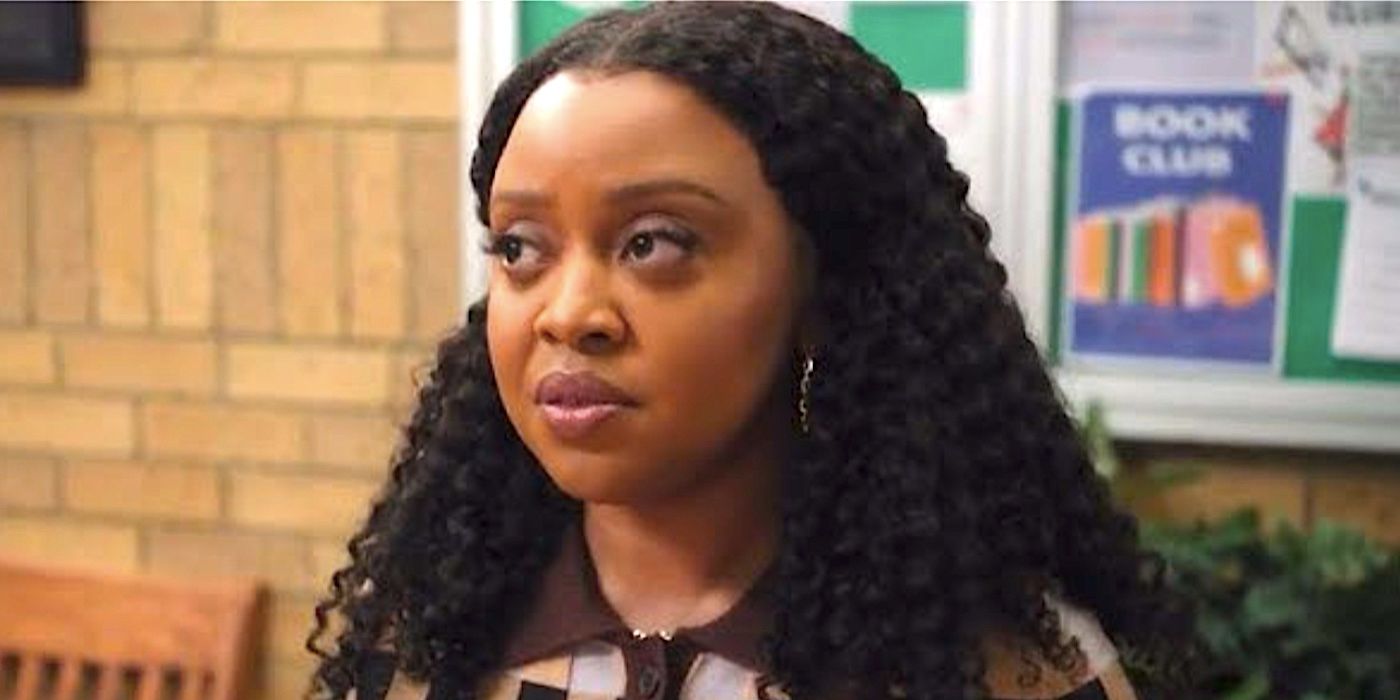
You've seen the memes. You've probably heard Janine Teagues’ high-pitched optimism echoing from someone’s phone in the checkout line. It is easily the biggest sitcom on the planet right now, and for good reason. But if you’re a mom or dad trying to figure out if this is a "family night" show or a "wait until the kids are in bed" show, the Abbott Elementary parents guide isn't as straightforward as a Disney+ rating.
It’s funny. It’s heartfelt. It also features a principal who is, quite frankly, a HR nightmare.
Quinta Brunson created something special here. It’s a mockumentary, styled after The Office, but set in a chronically underfunded Philadelphia public school. Because it airs on ABC, it technically fits the "broadcast standards" mold. That means no F-bombs. No graphic violence. No "Euphoria" style grit. But does that make it "safe"? Honestly, it depends on how you feel about your seven-year-old learning the nuances of workplace flirting or the occasional "damn."
Why the TV-PG Rating is a Bit Sneaky
The show is rated TV-PG. On paper, that suggests it’s fine for most kids with a little supervision. In reality, the humor is very much "adult-adjacent." Think about it this way: the jokes aren't about poop or cartoons; they’re about the crushing weight of systemic bureaucracy and the struggle to buy construction paper.
Kids might get bored. Or they might love Mr. Johnson, the janitor who thinks he’s an international man of mystery.
When looking at an Abbott Elementary parents guide, you have to consider the dialogue. The characters talk like real people. They use slang. They make references to pop culture that will fly over a third-grader's head. There is some mild language—words like "hell," "damn," and "ass" pop up occasionally. It’s never aggressive. It’s just... Philly.
Ava Coleman, played by the incomparable Janelle James, is the biggest wildcard. She’s the principal who shouldn't be a principal. Her dialogue is peppered with vanity, shallow insults, and the occasional suggestive comment about Gregory Eddie (the substitute-turned-full-time teacher). It’s played for laughs, and it is hilarious, but if you’re strict about "respectful behavior," Ava is going to be a tough pill to swallow for your kids.
Breaking Down the Content: Sex, Drugs, and... School Supplies?
Let's get into the weeds. If you're looking for a formal Abbott Elementary parents guide, you probably want to know about the "red flag" categories.
Sex and Romance:
There is no nudity. None. What you do get is a lot of "will-they-won't-they" tension. Janine and Gregory are the core of this. Their relationship involves longing stares, awkward conversations, and eventually, some kissing. It’s very PG. However, Ava’s constant thirst for Gregory—and her comments about his body—could be seen as borderline workplace harassment if it weren't a sitcom. It’s a great talking point for older kids about boundaries, actually.
Drugs and Alcohol:
The teachers go to bars. They drink beer and wine. Sometimes they talk about being hungover. In one notable episode, there’s a plot involving "FADE," a parody of the D.A.R.E. program, which handles the topic of drugs with a satirical lens. It’s not glorifying substance abuse; it’s mocking how schools handle the conversation.
Violence:
Zero. Unless you count a child accidentally hitting a teacher or a chaotic scene in the cafeteria. It is a very "soft" show in terms of physical conflict.
The "Real World" Factors That Make It Great for Teens
While the Abbott Elementary parents guide usually focuses on "bad stuff," we should talk about the "good stuff" that makes it worth watching with middle or high schoolers. The show tackles real issues.
- Underfunding: It shows teachers using their own money for supplies.
- Race and Class: It deals with the reality of a predominantly Black school in a city that doesn't always prioritize it.
- Career Ethics: It shows people who are bad at their jobs (Ava) and people who care too much (Janine).
If you have a kid who is starting to notice the world isn't always fair, Abbott is a fantastic bridge. It uses humor to mask some pretty heavy social commentary.
I remember watching an episode with a friend’s kid where they talked about the "gifted" program. The kid actually started asking why some schools have better stuff than others. That’s a heavy conversation for a Tuesday night, but the show handles it with so much grace that it doesn't feel like a lecture.
Is it Too Boring for Younger Kids?
Honestly? Probably.
Unless your kid is a weirdly sophisticated eight-year-old who loves dry humor and documentary-style zooms, they might find the pacing slow. There are no laugh tracks. There are no bright, flashy transitions. It relies on facial expressions and timing.
My advice for the Abbott Elementary parents guide is to treat it like The Office or Parks and Recreation. If your kid liked those, they’ll like this. If they prefer SpongeBob, they’re going to be asking to change the channel within ten minutes because they won't understand why everyone is stressed about a rug in the library.
Context Matters: The Philly Vibe
You can't talk about Abbott without talking about Philadelphia. The show is a love letter to the city. This means the characters have a certain "edge." They’re blunt. They’re loud. They’re fiercely loyal.
For parents, this is a "know your kid" situation. If you’re raising your children in a very sheltered environment where any kind of sass or "backtalk" is a major issue, the students in Abbott might stress you out. They aren't "bad" kids, but they are realistic. They talk back. They have attitudes. They are, in many ways, the stars of the show because they reflect the chaotic energy of a real classroom.
Quick Content Snapshot
| Category | Level | Notes |
|---|---|---|
| Language | Mild | Ass, damn, hell, and "sucks" are common. |
| Violence | None | Very safe. |
| Sexuality | Low | Flirting, some kissing, suggestive jokes from the principal. |
| Themes | Moderate | Systemic poverty, divorce, workplace stress, social justice. |
How to Watch it With Your Family
If you decide to dive in, don't just put it on and walk away. The best way to use this Abbott Elementary parents guide is to engage.
Ask your kids: "Is your principal like Ava?" (Hopefully, the answer is no).
Ask them: "Do your teachers have to ask for donations for books?"
It’s a window into a reality that many kids live every day, and for those who don't, it’s an important lesson in empathy.
The show is currently streaming on Hulu and Disney+, and new episodes air on ABC. It’s accessible, it’s short (22 minutes), and it’s one of the few things on TV right now that feels like it has a soul.
Actionable Steps for Parents
- Watch the Pilot First: Don't take my word for it. The first episode perfectly sets the tone. If you find Ava’s jokes about the superintendent too much, you’ll know right away.
- Check the Episode Topics: Some episodes deal specifically with things like "The Egg Drop" or "Read Along," which are very kid-friendly. Others deal with "Teacher conferences" or "Charter schools," which are more "adult-boredom" territory.
- Use Common Sense Media: If you want a literal count of every "bad" word, they are the gold standard for granular data. But for the vibe? The vibe is "heartfelt chaos."
- Talk About the Mockumentary Style: Explain to younger kids that the characters are "talking to the camera" because it’s a fake documentary. This helps them understand why the characters act differently when the "film crew" is around.
- Focus on Janine’s Resilience: If you want a positive takeaway, Janine is the ultimate role model for "trying your best when things suck." That’s a lesson every kid can use.
Abbott Elementary isn't just a "show for teachers." It’s a show about humans trying to do something good in a system that makes it hard. As a parent, that’s probably the most relatable thing you’ll ever watch. Just be prepared to explain why the principal is spending the school’s money on a new sign with her face on it instead of new desks.