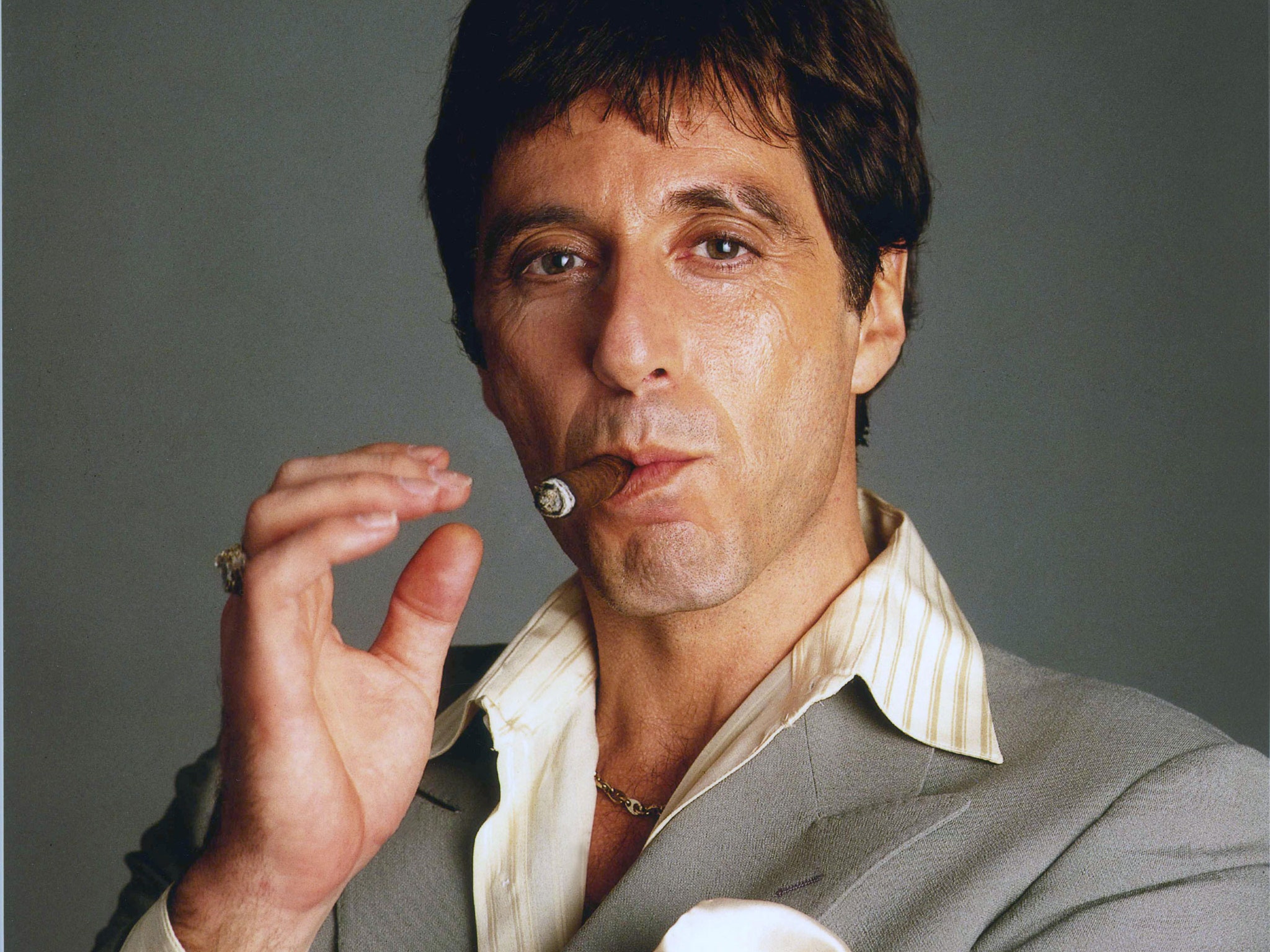
"My name is Antonio Montana, a political prisoner from Cuba." When Oliver Stone sat down to write those words, he wasn't just sketching a character. He was birthing a myth. That specific introduction, delivered with Al Pacino’s grit and snarl in the 1983 classic Scarface, redefined the American Dream by setting it on fire and dancing in the ashes. It's weird, right? Most people just say "Tony," but the formal "Antonio" carries this weight of a man trying to claim a dignity that the world—and his own choices—consistently denied him.
Tony Montana isn’t just a movie character. He’s a brand. He’s a cautionary tale that half the people watching missed the point of.
The Mariel Boatlift and the Birth of a Legend
Let's look at the facts. In 1980, the Mariel Boatlift saw roughly 125,000 Cubans arrive in Florida. Most were just families looking for a life that didn't involve bread lines. But Fidel Castro, in a move that was both brilliant and cruel, emptied his jails and mental hospitals into the mix. This is the world my name is Antonio Montana emerges from. He wasn't just a random criminal; he was a product of a specific geopolitical pressure cooker.
Brian De Palma, the director, took this real-world tension and turned the saturation up to eleven.
Tony starts at the bottom. Sunburn. Chainsaw scars. A tent city under a highway. It’s gritty. It’s gross. Honestly, it’s the most "real" part of the movie before the mountains of cocaine turn everything into a neon-soaked fever dream. When he tells the immigration officers his name, he isn't just identifying himself; he’s challenging them to remember it. He’s tired of being a number. He’s tired of being "scum."
Why the World Obsessed Over the Montana Name
Why do we care? Seriously. He’s a murderer. He’s a drug dealer. He’s a terrible brother.
Yet, you see his face on t-shirts in every flea market from Bangkok to Berlin. Hip-hop culture embraced him because he represented the "hustle" against a system that didn't want him to exist. Rappers like Raekwon or Future didn't just watch the movie; they lived in its shadow. The phrase my name is Antonio Montana became shorthand for "I am here, and you will deal with me."
The Psychology of the Anti-Hero
It's about the balls. Plain and simple. Tony has this warped sense of ethics—"I never fucked anybody over in my life who didn't have it coming to them." It’s a lie, of course. He kills plenty of people who didn't necessarily "have it coming" in a moral sense, but in his head, he's the only honest man in a room full of liars.
- He refuses to kill a woman and children in the New York hit.
- That’s his one line.
- That line is what kills him.
There’s a strange nobility in that one moment of restraint that makes the audience forgive him for the previous two hours of carnage. It’s classic tragic structure. He gains the world, loses his soul, and then tries to grab a tiny piece of that soul back right before the end.
The Language of Scarface
"Say hello to my little friend." We’ve heard it a million times. It's a meme before memes existed. But the script by Oliver Stone is actually much more nuanced than the catchphrases suggest. The dialogue reflects a man who is constantly translating his ambition into a language that isn't his first.
When he says my name is Antonio Montana, he's speaking to the American establishment. He’s telling the bankers and the lawyers and the cops that he’s the guy they’re actually afraid of. He’s the guy who does what they only dream of doing. He doesn't hide his greed. He wears it like a badge of honor.
Pacino’s performance is polarizing. Some critics at the time thought it was over-the-top, almost a caricature. But look at the eyes. There’s a desperation there. Even when he’s sitting in a bathtub the size of a swimming pool, he looks bored. He looks lonely. The "Antonio" who wanted everything realized that "everything" is actually pretty empty.
Cultural Impact Beyond the Screen
It’s not just movies. The video game Scarface: The World Is Yours actually explored an alternate reality where Tony survives the mansion shootout. It sold millions. Why? Because players wanted to be the guy who says my name is Antonio Montana. They wanted the tiger in the yard and the surveillance monitors in the office.
But the game, like the movie, misses the reality of the 1980s Miami drug trade. The real "Cocaine Cowboys" like Jorge "Rivi" Ayala or Griselda Blanco weren't living in Shakespearean tragedies. They were living in a bloodbath. The movie stylizes the violence into something operatic. It takes the "Antonio Montana" identity and turns it into a mythic figure, like Icarus flying too close to the sun with a grenade launcher.
The "Antonio" vs. "Tony" Divide
Throughout the film, the shift in how he’s addressed marks his descent. To his mother, he’s Antonio, the son who brought shame to the family. To Manny, his best friend, he’s Tony, the partner in crime. To the world, he becomes a symbol.
He hates being called Antonio by his mother because it reminds him of the poverty and the "good" life he rejected. He wants to be Tony. Tony is the king. Tony is the guy on the posters. But in that final, drug-fueled stand, he reverts to the raw power of his full name. He isn't just a thug anymore; he’s a force of nature.
What Most People Get Wrong About Scarface
People think it’s a movie about winning. It’s not. It’s a horror movie about the American Dream.
The ending isn't a "cool" shootout. It's a pathetic, lonely death in a fountain of his own blood. The world didn't become his; it chewed him up and spat him out. If you walk away from Scarface thinking Tony Montana is a role model, you’ve missed the third act entirely. The phrase my name is Antonio Montana is a declaration of presence, but by the end of the film, that presence is a void.
He lost his sister. He killed his best friend. He drove away his wife. He was left with nothing but a mountain of white powder and a statue that mocked him with the words "The World Is Yours."
Actionable Takeaways for the Modern Viewer
If you're going back to watch the film or if you’re exploring the lore for the first time, pay attention to the details that aren't the memes.
- Watch the Immigration Scene Closely: This is where the my name is Antonio Montana line carries the most weight. Notice how he looks at the officials. It’s not just defiance; it’s an observation of their weakness.
- Look at the Color Palette: Notice how the colors shift from the dusty, sweaty browns of the refugee camp to the garish, sickening purples and golds of his mansion. It’s a visual representation of his internal rot.
- Analyze the "Dishwasher" Scene: Tony’s first job in the US. He’s happy. He’s working. He’s with his friends. It’s the only time in the movie he actually seems to be enjoying his life. The tragedy is that he thought he needed more to be happy.
- Research the Real 1980s Miami: To truly understand the character, read about the Centurion Hotel or the Rise of the Medellin Cartel. The movie is a fantasy, but it’s grounded in a very real, very violent history that shaped the modern United States.
Ultimately, Tony Montana remains a fixture because he represents the raw, unfiltered ego. We all have a bit of that "Antonio" in us—the part that wants to tell the world to get out of our way. We just (hopefully) have the sense to realize that the world usually wins in the end. The legacy of my name is Antonio Montana isn't about the drugs or the money; it's about the universal human desire to be seen, to be heard, and to be more than just a face in the crowd.