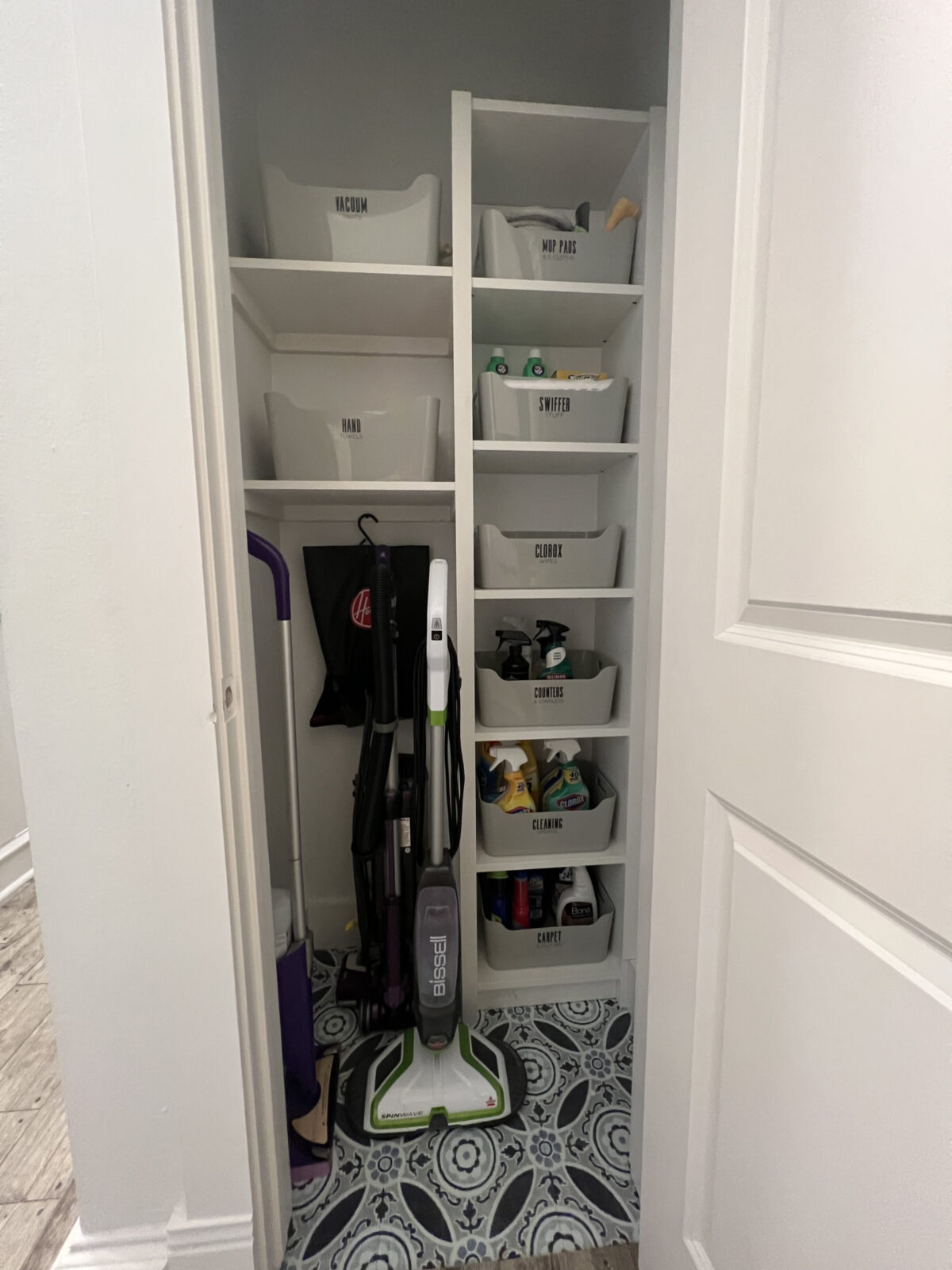
You know the feeling. You open that utility closet door, and it’s a physical fight. The vacuum hose springs out like an angry snake. The mop falls over. You’re pretty sure there’s a crevice tool somewhere at the bottom of the pile, but finding it involves a level of archaeological digging most of us just aren't up for on a Tuesday night. It’s annoying. Honestly, it’s why so many of us end up leaving the Dyson just sitting in the corner of the kitchen, looking like a piece of high-tech modern art that doesn't actually belong there.
Finding a dedicated vacuum cleaner storage cabinet isn't just about hiding the dirt-sucker. It’s about sanity. Most modern homes are built with "open concepts" that look great in photos but offer zero places to put a bulky canister vacuum or a tall stick model. We’ve moved away from the giant walk-in pantry of the 1920s, and now we’re paying the price in clutter. If you’ve ever tried to shove a Miele canister into a standard kitchen cabinet, you know the struggle is very, very real.
The Problem With "Standard" Storage
Standard cabinets are usually 24 inches deep and 36 inches high. That is literally the worst possible size for a vacuum. If you have a stick vacuum, it’s too tall. If you have a canister, the hose takes up the whole footprint, leaving no room for your cleaning sprays or extra bags. Most people just give up. They shove it behind a door.
Designers like Joanna Teplin and Clea Shearer from The Home Edit have basically made careers out of fixing this exact "dead zone" in the house. They often argue that if a tool is hard to get to, you won't use it. That’s the psychological trap of a bad vacuum cleaner storage cabinet. If you have to move three boxes of detergent and a bucket just to reach the vacuum, you’re going to let those crumbs sit on the rug for another three days. You just are.
Size Matters More Than You Think
Before you go buying some flat-pack wardrobe from IKEA and calling it a day, you have to measure the "swing." Stick vacuums, especially the popular Dyson V-series or the Shark Cordless models, need vertical clearance. But they also need a charging port. If your cabinet doesn't have an outlet inside, you're still stuck with a cord trailing out the door like a tripwire.
- Height requirements: Most stick vacuums need at least 48 to 52 inches of vertical space.
- Depth issues: Canister vacuums are chunky. You need at least 15 inches of depth so the door actually closes without you having to kick it shut.
- The "Hose Factor": This is the silent killer. Vacuum hoses have a memory of their own. If you don't have a hook specifically for the hose, it will expand to fill every available cubic inch of your cabinet.
Custom vs. Off-the-Shelf
Should you spend $2,000 on a custom built-in? Probably not. Unless you’re doing a full kitchen remodel, a custom vacuum cleaner storage cabinet is a luxury that most people don't need. You can get away with a tall pantry cabinet or even a modified broom closet.
The secret is the interior configuration.
Look at the Pax system or the Sektion line. They allow you to move shelves around. You want one tall, narrow "lane" for the vacuum itself. Then, you want narrow shelves on the side for your attachments. Most people lose their vacuum attachments because they throw them in a drawer. If you mount them on a pegboard inside the cabinet door, you’ll actually use them to clean your baseboards. Imagine that.
Real-World Solutions That Actually Work
I’ve seen people use "locker" style cabinets for this. It’s kind of brilliant. Metal lockers are durable, they’re easy to wipe down (because vacuums are dirty, obviously), and they usually have the height you need. Brands like Mustard Made have made lockers trendy again, and they fit a vacuum perfectly.
Then there’s the wooden utility cabinet. If you go this route, look for "broom cabinets." They are specifically designed without the middle horizontal shelves. But beware of the flimsy backing. If you’re mounting a heavy cordless vacuum dock to the back wall of a cheap particle-board cabinet, it will rip out. You need to screw that dock into a stud or at least use heavy-duty toggle bolts.
Dealing With the "Heat" Issue
Here’s something most "organizing" blogs won't tell you: batteries get warm. If you are charging a high-powered lithium-ion battery inside a tiny, unventilated vacuum cleaner storage cabinet, it stays hot. Over time, heat is the enemy of battery life.
You don't need a fan system. That’s overkill. Just make sure there’s a little bit of breathing room around the charging dock. Don't pack your winter coats right up against the motor head while it’s plugged in. It’s a small detail, but it’s the difference between your vacuum lasting three years or six.
The Robot Vacuum Factor
If you’ve moved on to a Roomba or a Roborock, your storage needs are totally different. You don't need a tall cabinet. You need a "garage."
I’ve seen some really clever DIYers cut a small arched hole in the bottom of a standard kitchen base cabinet. The robot lives inside, hidden from view, and just rolls out when it’s time to work. It’s the ultimate stealth move. But you have to make sure the docking station has a clear line of sight to the "doorway," or the poor thing will just bump into the wood until it dies.
Why Placement is Everything
Putting your vacuum cleaner storage cabinet in the basement is a mistake. I’ve seen it a hundred times. People think, "I'll put the ugly stuff downstairs."
Then they never go downstairs.
Your cleaning hub should be central. Near the kitchen or the main mudroom is best. High-traffic areas collect the most grit. If the vacuum is ten steps away, the house stays clean. If it’s twenty steps and a flight of stairs away, the house gets dusty. It’s a simple ratio of laziness to distance.
Material Choices: Beyond White Laminate
Most utility cabinets come in that sad, hospital-white laminate. It chips. It yellows. If you’re putting this cabinet in a visible area, consider wood veneers or even a coat of high-quality cabinet paint like Farrow & Ball or Benjamin Moore's Scuff-X. Since vacuums are heavy and made of hard plastic, they tend to bang into the sides of the cabinet. A durable finish matters.
Metal is actually the most "expert" choice here. It’s why commercial kitchens use it. It doesn't absorb smells, and vacuums—let's be honest—sometimes smell like wet dog and old dust. A quick wipe with a disinfectant and a metal cabinet is good as new. Wood and MDF? They soak that stuff up.
Organizing the Small Stuff
Attachments are the bane of my existence. The crevice tool, the upholstery brush, the weird flexible thing for the ceiling fans.
- Magnetic Strips: If your attachments have metal parts (some do, some don't), a magnetic knife strip on the inside of the door is a game changer.
- Clear Bins: Don't just throw them in a bin. Get a clear, labeled bin so you can see which one is for the car and which one is for the sofa.
- Over-the-door Organizers: Those mesh shoe holders? They are perfect for vacuum bags, filters, and small nozzles.
Maintenance of the Space
A vacuum cleaner storage cabinet is not a "set it and forget it" situation. Dirt falls off the vacuum. It just does. Every few months, you need to empty the cabinet and vacuum the cabinet itself. It’s meta, I know. But if the bottom of your cabinet is full of hair and grit, that stuff is just going to get tracked back out the next time you pull the vacuum out.
Actionable Next Steps for a Better Setup
Don't go out and buy a whole new wardrobe today. Start by measuring your tallest cleaning tool. That's your baseline. If your vacuum is 49 inches, you need a 50-inch opening.
Check for power. If you don't have an outlet in your closet, call an electrician. It’s usually a simple job to pull power from a neighboring room, and it makes cordless vacuums actually functional. A cordless vacuum that isn't always charging is just a very expensive stick.
Finally, look at your "zone." If you have space, try to combine your vacuum storage with your floor cleaners and your steam mop. Grouping by "function" (floor care) rather than "object" (vacuum) is how professional organizers like those at NEAT Method approach high-end homes. It streamlines the workflow.
Get the vacuum off the floor. Use a wall mount even inside the cabinet. It saves the brush roll from getting flat spots and makes the whole space feel twice as big. Stop fighting the hose and start managing the space. It’s a small change, but your Saturday morning cleaning routine will feel about 40% less annoying once you aren't being attacked by your own closet.