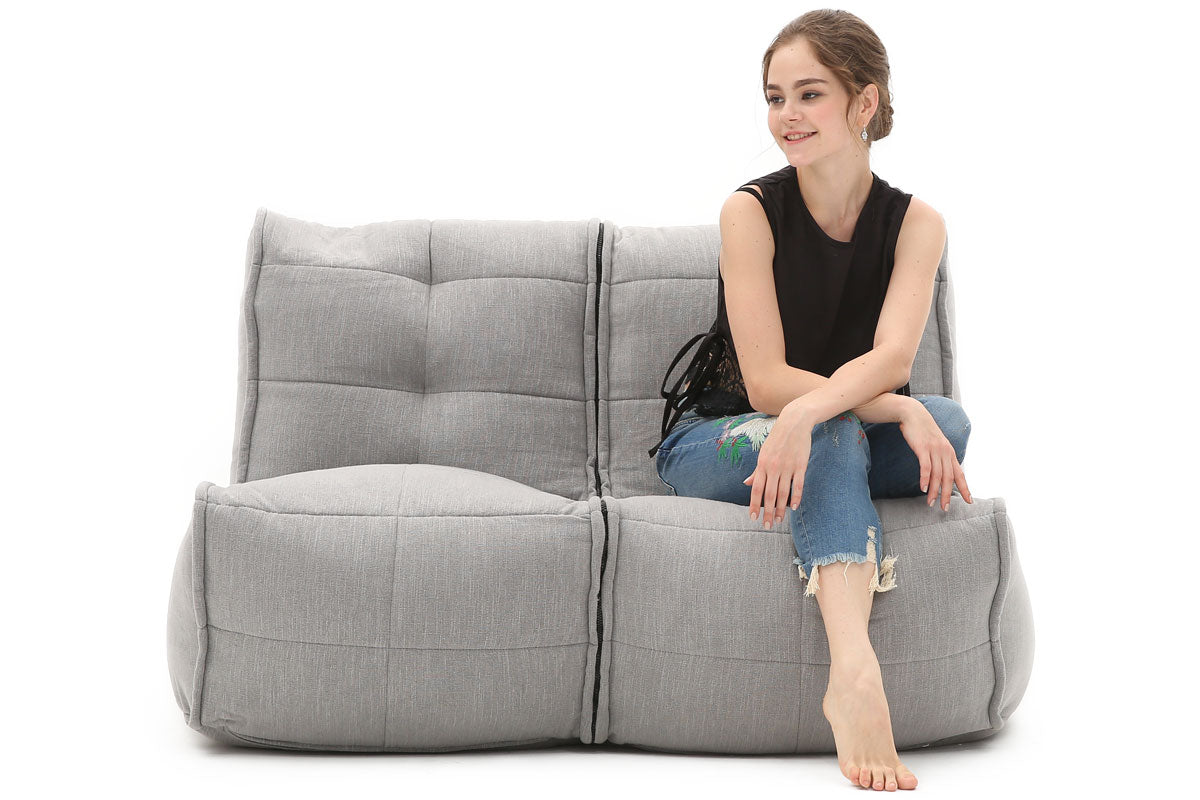
Walk into any playroom and you’ll see it. The sad, deflated lump of polyester in the corner. Honestly, we’ve all been there—thinking we’ve scored a win for the kids’ reading nook only to realize three weeks later that the "supportive seat" we bought is basically a glorified garbage bag filled with static-prone packing peanuts. Finding a decent childrens bean bag sofa is surprisingly tricky because the market is flooded with cheap imports that leak beads the moment a toddler decides to use it as a wrestling mat.
Kids don't sit. They launch. They flop. They spill juice boxes with surgical precision. If you’re looking for furniture that survives a six-year-old’s "the floor is lava" game, you need more than just a cute pattern. You need structural integrity.
The foam vs. bead debate is actually a big deal
Most people assume all bean bags are the same inside. They aren't. Standard beads—expanded polystyrene (EPS)—are what give that classic "crunchy" feel. They’re lightweight, which is great if your kid likes to drag their chair from the bedroom to the living room every ten minutes. But EPS has a major flaw: it flattens. Over time, the air inside the beads escapes, leaving you with a pancake.
Then there’s shredded memory foam. Brands like Big Joe or CordaRoy’s (which you might remember from Shark Tank) popularized this. It’s heavier. It’s way more comfortable. It doesn’t make that loud rustling sound that wakes up a napping baby. However, foam doesn't have that "molding" quality that beads do. If your kid wants a seat that wraps around them like a hug, beads win. If they want a mini-couch that feels like a real sofa, go foam.
Safety isn't just a buzzword here
Let’s talk about the zippers. If you buy a childrens bean bag sofa and the zipper has a visible pull tab, that’s actually a massive red flag. Under the U.S. Consumer Product Safety Commission (CPSC) guidelines, these products are required to have "locking zippers." This isn't just to prevent a mess. It’s a literal life-saver. Small children have been known to crawl inside bean bags or inhale the beads, which is a severe suffocation hazard. A quality sofa will require a paperclip or a special tool to open the zipper. If it opens easily, don't buy it.
Also, check for CertiPUR-US certification if you're going the foam route. You don't want off-gassing chemicals in a small playroom with limited ventilation. Kids spend a lot of time with their faces pressed directly against these materials.
Fabric choice: Beyond the "wipe clean" myth
Manufacturers love to claim their fabrics are "wipe clean." Often, that’s code for "feels like a plastic tarp." While vinyl is easy to scrub, it’s sweaty. Nobody wants to peel their legs off a chair in July.
- Cotton Duck or Canvas: Tough as nails. It handles abrasion well. The downside? It stains easily unless it's been treated with a protectant.
- Micro-Suede: Feels premium. It's surprisingly durable, but it’s a magnet for pet hair. If you have a Golden Retriever, maybe skip this.
- Outdoor-Rated Polyester: This is the sleeper hit. Even for indoor use, "outdoor" fabrics are often UV-resistant and water-repellent. They can handle a spilled Capri Sun way better than a standard cotton blend.
Weight matters too. A lightweight bag is a projectile. A heavy foam sofa stays put. Think about the room's layout before you commit to a 20-pound block of foam.
Why structural "sofa" designs are winning
The traditional round bean bag is fine for a quick seat, but the "sofa" style—the ones with actual armrests and a back—is a game changer for posture. Experts in pediatric ergonomics often point out that "slumping" isn't great for developing spines during long gaming sessions or reading marathons. A structured childrens bean bag sofa provides a defined "bucket" seat. It keeps the child centered.
Check the seams. Look for double-stitching. Or better yet, internal liners. An internal liner means you can unzip the outer cover and throw it in the wash without 50,000 white beads exploding across your carpet. If a bean bag doesn't have a liner, you’re basically committing to never truly cleaning it.
What most people get wrong about size
Size charts are notoriously misleading. You see a photo of a kid looking cozy, but that kid is usually a tiny four-year-old. By the time your child hits eight or nine, many "toddler" sized sofas are useless. If you have the space, buy one size up. A "large" or "teen" size often fits a grade-schooler much better and actually lasts until they’re middle-school aged. It's better to have a slightly oversized chair than a "sofa" that your kid grows out of in six months.
Maintenance is where the love dies
Real talk: children are messy. Within a month, that bean bag will have crumbs in the crevices and a mystery sticky spot on the armrest.
- Vacuuming: Use the upholstery attachment once a week. Crumbs settle deep into the fabric grain and can actually act like sandpaper, wearing down the fibers from the inside out.
- The Fluff Factor: If you have a foam-filled sofa, it needs to be "re-frothed." Turn it over, give it a few good kicks, and let air back into the foam.
- Refilling: If you chose beads, accept that you will need to buy a "top-up" bag every 6 to 12 months. It’s just part of the deal.
Practical steps for your purchase
Don't just hit "buy" on the first sponsored ad you see. Start by measuring the actual floor footprint. Most people underestimate how much space a flared bean bag takes up.
Next, look for a "double-cover" system. This is the gold standard. The outer cover should be a heavy-duty fabric like 1680D polyester or a thick cotton canvas, while the inner bag holds the filling securely.
Finally, prioritize brands that offer replacement covers. Styles change. Your kid might love dinosaurs today and hate them by Tuesday. Being able to swap a $30 cover instead of buying a whole new $150 sofa is the smartest move you can make. Check for the UL 2145 standard if you're in the US—it's the specific safety standard for bean bag chairs.
Look for reinforced handles. If a child is going to move the sofa, they will pull it by the weakest point. If the handle isn't box-stitched, it will rip, and that's usually where the beads start to leak.
Invest in quality once. It's cheaper than buying three "budget" chairs over three years. Your floor—and your sanity—will thank you.