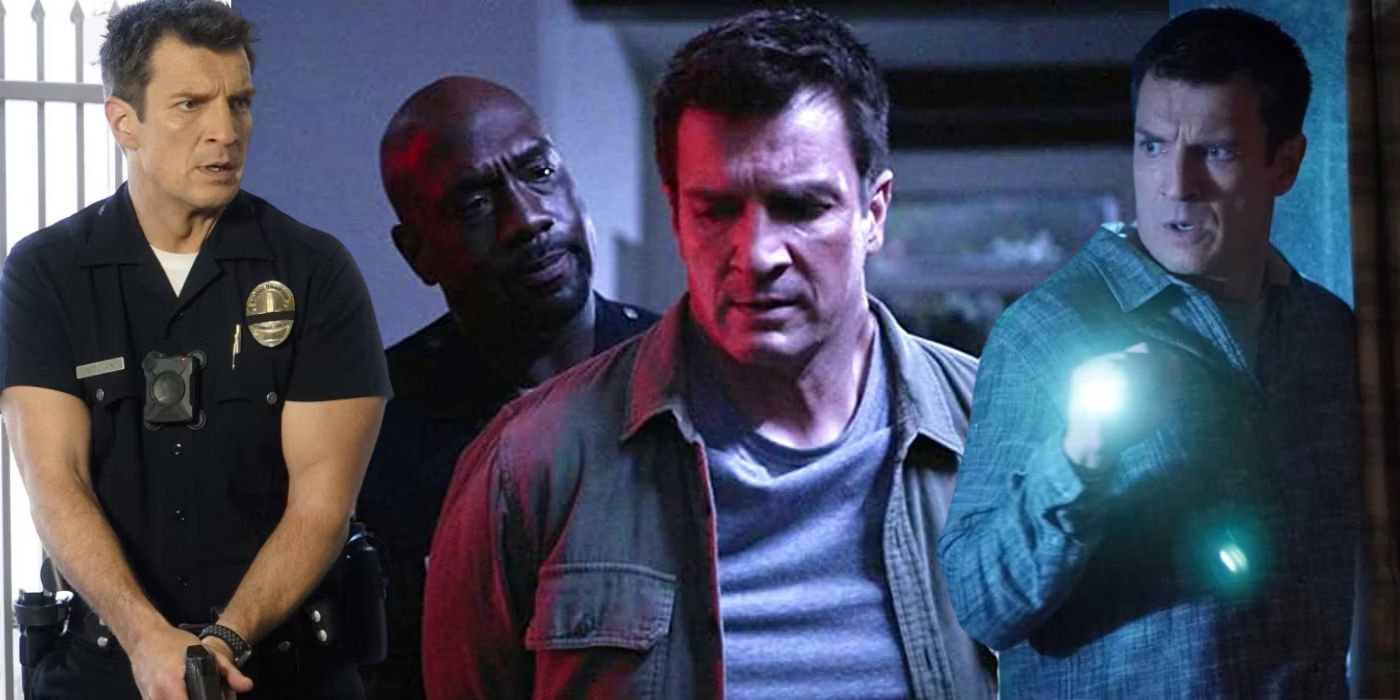
Television is usually an escape. We watch cop shows to see the good guys win, the bad guys go to jail, and the moral arc of the universe bend toward justice in exactly forty-two minutes. But then came season 3 of The Rookie. Specifically, then came Doug Stanton.
If you've spent any time in the fandom, you know that name usually follows a heavy sigh. Played by Brandon Routh—yes, the man who was literally Superman—Doug Stanton was the antithesis of everything the show stood for. He wasn't just a "bad cop" in the sense of being corrupt or taking bribes. He was much more dangerous because he believed he was a good one.
The introduction of Doug Stanton the rookie trainer was a sharp pivot for the series. Following the real-world events of 2020 and the global conversations about police reform, the writers decided to stop dancing around systemic issues. They dropped a polarizing, racist training officer right into the Mid-Wilshire station and forced Jackson West to deal with the fallout. Honestly, it changed the show forever.
The Man Behind the Badge: Who is Doug Stanton?
Brandon Routh’s casting was a stroke of genius, or maybe a cruel joke, depending on how you look at it. We’re used to Routh being the hero. He’s charming. He’s got that jawline. So when he shows up as Officer Doug Stanton, an 11-year veteran of the LAPD (formerly an LA County Sheriff), you almost want to like him.
He talks about his wife, Giselle. He mentions his two kids. He seems like a "cop's cop." But the mask slips almost immediately. Stanton wasn't just "old school." He was a predator with a badge. He used terms like "bros" and "gang-bangers" as thin veils for racial profiling. He didn't just patrol neighborhoods; he targeted them.
For Jackson West, who was the son of the head of Internal Affairs, Stanton was a nightmare scenario. Jackson was a legacy. He wanted to do things by the book. But Stanton’s book was written in prejudice and power trips.
The Moment Everything Broke
The tension between Jackson and Stanton didn't just simmer—it boiled over in the episode "Lockdown." This is the one fans still talk about. This is the one that makes your stomach turn.
After Jackson finally calls out Stanton’s "racist ass," things get ugly. Stanton threatens to wash him out of the program. He threatens Jackson’s career. But the real betrayal happens during a call at an apartment complex.
While searching for a suspect, Jackson gets jumped. He’s being beaten by four men, fighting for his life. Stanton turns the corner, sees his rookie being pulverized, and... he just stops. He doesn't draw his weapon. He doesn't call for backup. He literally backs away into the shadows, letting the assault continue.
It was a cold-blooded attempt to let Jackson get "humbled" or worse.
The Body Cam Twist
What Stanton forgot—or maybe just underestimated—was Jackson’s intelligence. Even while bloodied and barely conscious, Jackson had the presence of mind to reach up and activate Stanton’s body camera.
Because of the way the tech works (it buffers the previous two minutes of video when activated), the camera caught everything. It caught Stanton standing there. It caught him doing nothing. It was the "smoking gun" that finally got the badge taken away, or so we thought.
What Happened to Doug Stanton?
If you're looking for a clean, happy ending where the villain disappears forever, The Rookie didn't give it to you. That’s why this storyline still feels so raw.
Stanton was placed on administrative leave and eventually "terminated," but the system protected its own. In the episode "Triple Duty," we find out he won his appeal. He wasn't fired; he was just demoted and moved to a different division.
- The Reinstatement: He was moved to the Hollywood Division as a P2 (Police Officer II).
- The New Rank: He lost his seniority and his status as a Training Officer.
- The Reality: He was still a cop.
Sergeant Grey and Jackson didn't let it go entirely, though. They reached out to his new supervisor and ensured she saw the footage of Stanton abandoning his partner. They made sure his new colleagues knew exactly who was sitting in the patrol car next to them.
Why Brandon Routh Took the Role
A lot of people wondered why the guy who played Ray Palmer and Superman would want to be the most hated man on network TV. Routh has been pretty vocal about it in interviews. He knew the character was "polarizing," to put it lightly.
He wanted to play against type to highlight a real-world issue. It wasn't about being a villain for the sake of drama; it was about showing the "worst version of a truthful cop." Routh’s performance was chilling because it was so grounded. He didn't twirl a mustache. He just smiled while doing something horrific.
Actionable Insights: Lessons from the Stanton Arc
While Doug Stanton the rookie trainer is a fictional character, the arc was designed to mirror real-world complexities in law enforcement and workplace ethics. Here is what we can actually take away from that intense Season 3 storyline:
1. The Power of Documentation
Jackson West didn't win by shouting louder; he won because he had the footage. In any high-stakes environment, whether it's a corporate office or a construction site, documentation is the only thing that stands up against "he-said, she-said" scenarios. If you feel like something is wrong, keep a log. Use the tools available to you.
2. The Weight of Silence
The most haunting part of the Stanton story wasn't just his actions, but the way other "good" cops were hesitant to speak up initially. It highlights that silence is often a form of complicity. Breaking that silence, as Jackson did, usually comes with a massive personal risk.
3. Systems Are Hard to Change
The fact that Stanton got his job back—even after abandoning a partner—is a harsh lesson in institutional inertia. It reminds viewers that one "win" doesn't fix a broken system. It takes consistent, long-term pressure from people like Sergeant Grey to make sure bad actors don't just fade into the background.
4. Character vs. Reputation
Stanton relied on his reputation as a "decorated veteran" to shield his character flaws. It’s a reminder to judge people by their current actions, not their past accolades. Just because someone has been doing a job for eleven years doesn't mean they're doing it right.
The legacy of Doug Stanton is still felt in The Rookie. Even after Jackson West’s tragic exit from the show later on, the bravery he showed in standing up to Stanton remains his defining moment. It wasn't about the arrests he made; it was about the cop he refused to become.
If you're rewatching the series, pay close attention to the subtle ways Stanton tests Jackson’s boundaries in those early episodes. It's a masterclass in how toxic behavior starts small before it turns deadly.
Keep an eye on the background of the Hollywood Division scenes in later seasons. While we haven't seen much of him since, the shadow of Doug Stanton still hangs over the LAPD's fictional world as a reminder that the real "bad guys" sometimes wear the same uniform as the heroes.