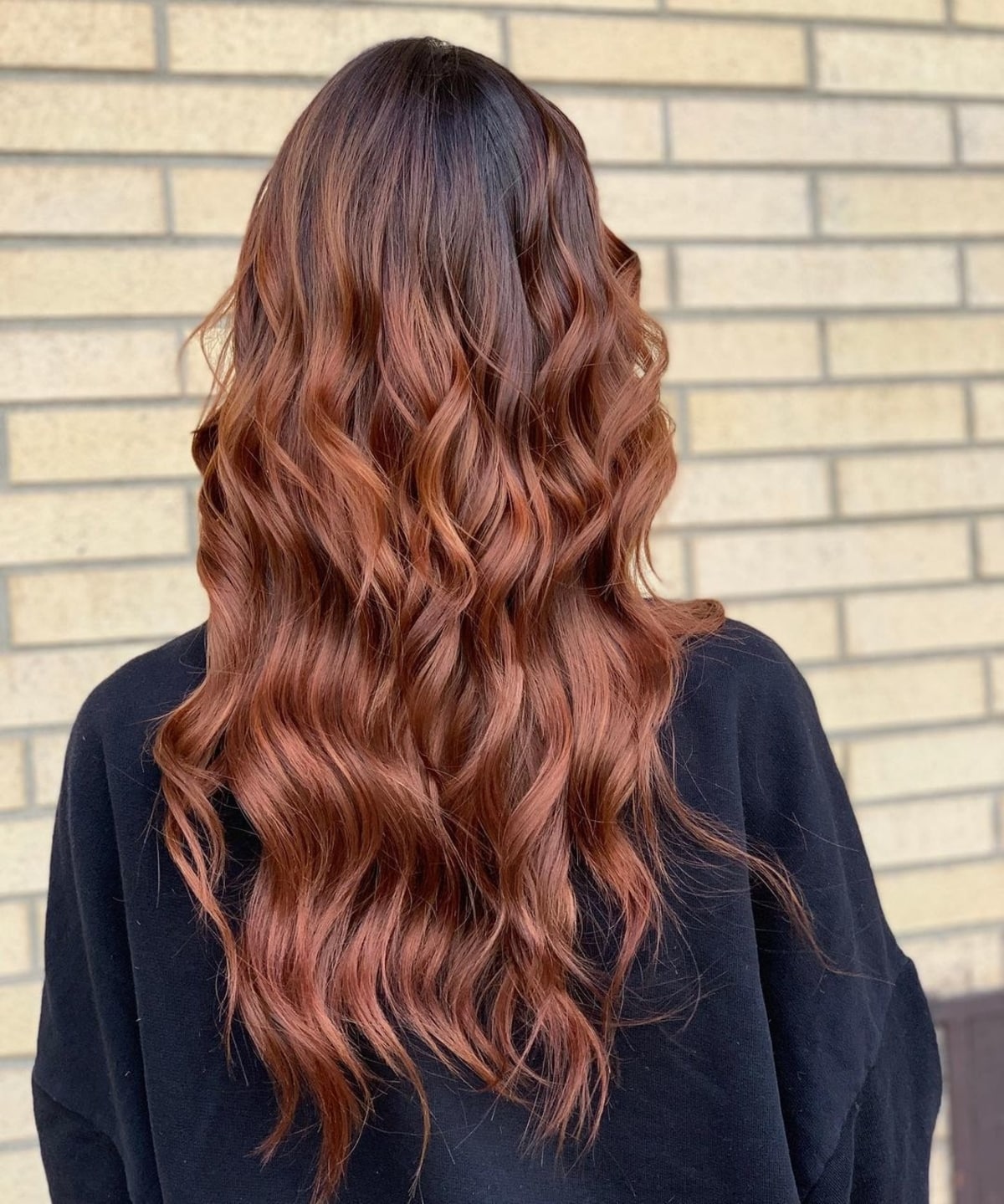
Red hair is a commitment. It’s also a bit of a trickster. You see a "burnt copper" on Pinterest, show it to your stylist, and suddenly you’re staring at a reflection that looks more like a neon penny than a sunset. That’s because the copper hair colour chart isn't just a menu; it's a map of undertones, levels, and light reflections that behave differently depending on who is wearing them. Honestly, copper is the most temperamental pigment in the salon. It has the largest molecular size of any hair dye, meaning it struggles to get inside the hair shaft and fights even harder to stay there.
If you've ever wondered why your ginger fade turns muddy after three washes, or why some coppers make you look washed out while others make your eyes pop, you’re in the right place. We are going deep into the mechanics of orange, gold, and red.
Why the Copper Hair Colour Chart is Different from Everything Else
Most people think of hair colour on a scale of 1 to 10. One is black. Ten is lightest blonde. Easy. But when you introduce copper, you're playing with the "comma" or the "point" after that number. In the professional world, copper is usually represented by the number 4. So, if you see a box or a tube labeled 7.4, that's a level 7 (medium blonde) with a copper (.4) reflect.
It sounds simple, but it’t not.
A 7.44 is "intense copper." A 7.43 is "copper gold." A 7.45 is "copper mahogany." See the problem? If you don't know the difference between a gold-leaning copper and a red-leaning copper, you're basically gambling with your face. Copper is essentially a mix of yellow and red. The ratio of those two determines if you look like a natural redhead or a character from an anime. Real experts like Josh Wood or Rita Hazan often talk about "bespoke" reds because a standard chart is just a starting point.
Decoding the Levels: From Soft Peach to Deep Auburn
Let's break down how these shades actually look on a person.
Light Copper (Levels 8-10)
This is your "strawberry blonde" or "apricot" territory. It’s very delicate. If your hair is naturally dark, reaching this level requires significant bleaching, which can be a nightmare for copper retention. Because the hair is porous from the bleach, the copper molecules just slide right out. You’ve probably seen this on celebrities who go "cowboy copper"—it looks stunning for a week and then turns into a weird, sandy beige.
Medium Copper (Levels 6-7)
This is the sweet spot. This is the classic "ginger" or "penny" copper. It has enough depth to actually hold onto the pigment but is bright enough to be unmistakably orange. A 7.4 is the industry standard for a vibrant, believable copper. It works wonders on people with fair skin and green or blue eyes. If you have a lot of pink in your skin, though, be careful. Too much red in the copper will make you look like you have a permanent fever.
Dark Copper (Levels 4-5)
Think burnished leather, mahogany, or "auburn." These shades are incredibly rich and usually the easiest to maintain because they have a brown base. They don't require the hair to be stripped of its natural strength. If you have olive skin, this is usually where you want to live. A cool-toned, deep copper can actually neutralize sallow undertones in the skin.
The Secret Language of Reflects
Ever noticed how some copper hair looks "expensive" while others look... well, cheap? It’s the reflect.
Most professional brands use a secondary tone to balance the copper. A 7.43 (Copper Gold) reflects light brilliantly. It looks sunny. It’s what you want if you’re trying to look like you’ve been in the California sun. On the flip side, a 7.41 (Copper Ash) sounds like a contradiction, but it's actually a "muted copper" or "burnt copper." It’s cooler, grittier, and much more modern.
Then there’s the 7.44. The double digit means the copper is doubled. It’s loud. It’s vibrant. It’s also the hardest to get rid of if you decide you hate it.
Skin Undertones: The Make-or-Break Factor
You can pick the prettiest shade on the copper hair colour chart, but if it clashes with your skin, it’s a disaster. You've got to know if you're warm, cool, or neutral.
- Warm Undertones: You have yellow or golden hues in your skin. You look best in "true" coppers or copper-golds. Think pumpkin spice and honey.
- Cool Undertones: You have pink or blue hues. Avoid the super-yellow coppers. You need coppers that lean toward rose gold or "strawberry" to keep from looking sickly.
- Neutral Undertones: You're the lucky one. You can bounce between a vivid orange-copper and a brownish-auburn without much trouble.
There’s a trick stylists use involving a piece of gold and silver jewelry. If gold makes your skin look alive, go for a gold-based copper. If silver is your best friend, you need a copper that has a hint of violet or ash to cool it down.
Why Your Copper Fades (And How to Stop It)
Copper is notorious. It’s the "bad boy" of the hair colour world—exciting at first, but leaves you way too soon.
Water is actually your biggest enemy. Not just any water, but hot water. Hot water opens the hair cuticle, and since copper molecules are so large, they just tumble right out. If you aren't rinsing with cool water, you're essentially washing money down the drain. Also, your shampoo matters more than you think. Most drugstore shampoos contain sulfates that are basically industrial-strength detergents. They’ll strip a copper head of its vibrancy in two washes.
You need a copper-depositing conditioner. Brands like Celeb Luxury or Davines make "Alchemic" conditioners that actually put pigment back into the hair while you shower. It’s the only way to keep that 7.4 looking like a 7.4 for more than a fortnight.
Misconceptions About Going Red
People think that because copper is "bright," it covers everything. It doesn't. Copper is actually quite transparent. If you have a lot of grey hair, copper can sometimes turn "hot," meaning the roots look neon while the ends look dull. Greys have no natural pigment, so they take the dye differently than the rest of your hair. A pro will usually mix a "natural" base (.0) with the copper (.4) to ensure the greys actually get covered instead of just being tinted like a highlighter pen.
Another myth? That you can’t go back. While copper is hard to maintain, it's actually relatively easy for a professional to neutralize with a blue or green toner. What’s hard is the stain. If you use a cheap box dye, the metallic salts can permanently alter the hair’s porosity, making future colour corrections a nightmare.
Actionable Steps for Your Copper Journey
If you’re staring at a copper hair colour chart and feeling overwhelmed, don't just point at the brightest swatch.
- Check your starting level. If you are a level 4 (dark brown), you cannot get a level 8 copper without bleach. Know your limits.
- Buy the maintenance products before you dye. You need a sulfate-free shampoo and a copper-depositing mask ready in your bathroom. Don't wait until it starts fading.
- The "Two-Week" Rule. Copper always looks 20% too bright the day you do it. Give it two washes to settle into its true tone before you panic and try to dye over it.
- Consider a Gloss. If you're scared of the commitment, ask your stylist for a copper gloss or toner. It’s demi-permanent, meaning it will fade out completely over 6-8 weeks, letting you test-drive the look without the long-term attachment.
- Watch the Sun. UV rays shatter copper pigments. If you're going to be outside, use a hair veil or a hat. Copper oxidizes faster than any other shade, turning a "rusty" orange if left unprotected.
The reality of copper hair is that it requires more work than blonde or brunette. But when it's done right—matching the skin tone and maintained with the right proteins—there is nothing more striking. It’s a high-maintenance shade for a high-impact look.